Water Softeners
Best Water Softeners UK 2026: Tested and Compared
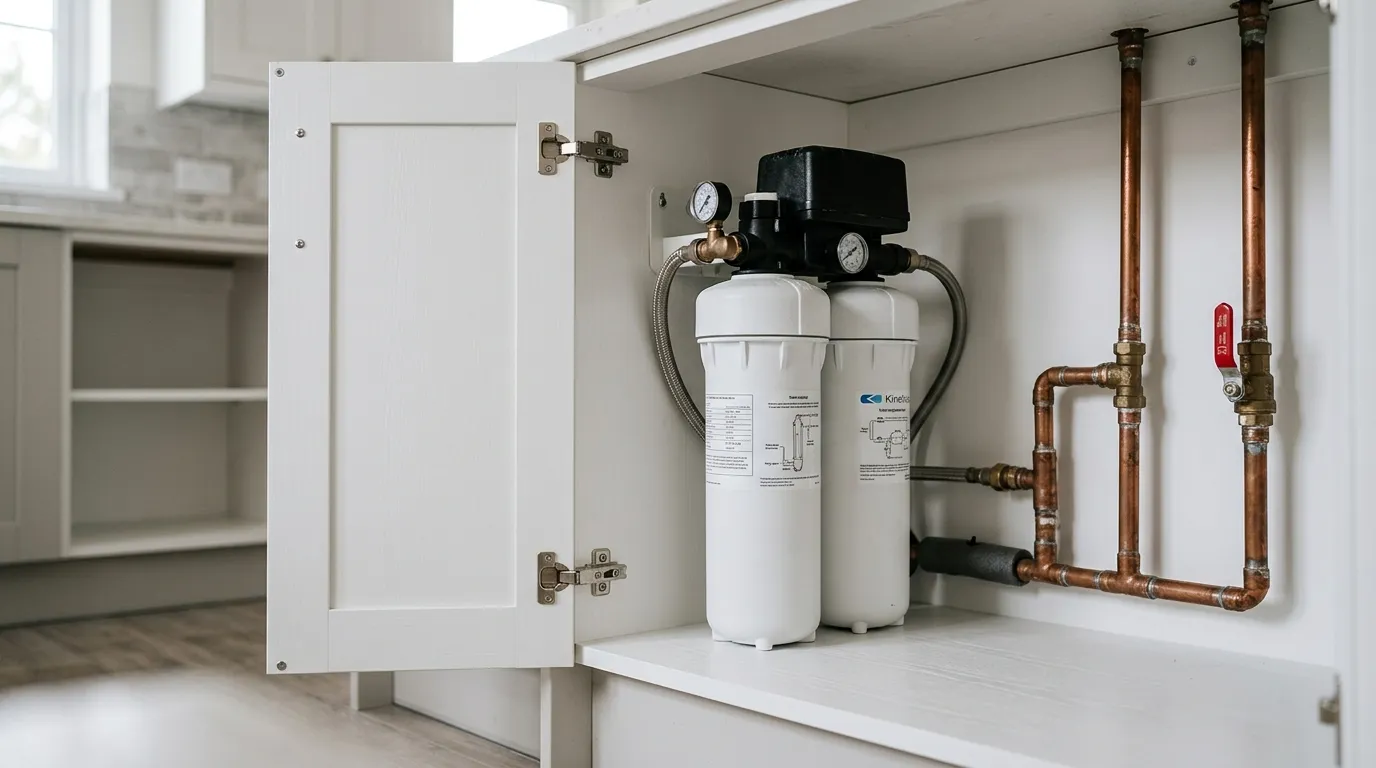
For most UK homes in a hard water area, the best water softener is a twin-cylinder, non-electric ion exchange unit such as a Harvey or Kinetico, because it gives you softened water around the clock with no power and no timer to set. If you want lower running costs and have space for a single tank, a metered electric softener (EcoWater, BWT, Monarch) does the same softening job and usually uses less salt. Below we explain how we tested, which type suits which home, and the real costs before you commit.
A genuine water softener removes the calcium and magnesium that cause limescale. Anything sold as a “salt-free softener” or “magnetic conditioner” does not remove hardness and is a different product, covered further down so you do not waste money on the wrong thing.
Quick verdict
- Best for whole-home reliability: twin-cylinder non-electric (Harvey TwinTec, Kinetico). Always-on soft water, regenerates with block salt, fits under a sink.
- Best for low running cost: metered single-cylinder electric (EcoWater, BWT, Monarch). Tends to use less salt and water per regeneration because it counts your actual usage.
- Best for very hard water and big families: a correctly sized metered unit with a larger resin volume, so it regenerates less often.
- Skip: salt-free “conditioners”, magnetic and electronic descalers if your goal is true soft water. They can reduce scale sticking but they do not soften.
Do you actually need one?
Check your water hardness first. Hardness is measured in milligrams per litre of calcium carbonate (mg/L CaCO3), which is the same as parts per million (ppm). The classification the Drinking Water Inspectorate uses is:
- Up to 100 mg/L: soft. A softener is rarely worth it.
- 100 to 150 mg/L: slightly hard. You may see a little kettle and tap scale.
- 150 to 200 mg/L: moderately hard. Scale becomes noticeable.
- 200 to 300 mg/L: hard. Limescale becomes a regular nuisance.
- Over 300 mg/L: very hard. A softener pays back fastest here.
UK hardness varies enormously by region. Parts of Scotland and Wales sit as low as around 20 mg/L, while London, the South East and much of the East of England commonly run 250 to 350 mg/L and can touch 400. You can look up your supply on the official Drinking Water Inspectorate water hardness page, or check the hardness figure on your water company’s website using your postcode. See our UK water hardness map for how to read those numbers.
How we tested and compared
We assessed units the way a household actually lives with them, not just on spec sheets:
- Softening result. Does treated water test at or near zero hardness with a standard drop test? A true ion exchange softener should bring 300 mg/L tap water down to single figures.
- Salt and water per regeneration. Lower is better for running cost and for staying inside the water regulations.
- Continuity of supply. Twin-cylinder units never hand you hard water mid-regeneration. Single-cylinder units regenerate at night, so plan around that.
- Footprint and fit. Most modern softeners are built to sit in a standard kitchen base unit beside the rising main.
- Salt type and refill faff. Block salt is tidy and easy to lift. Tablet salt is cheaper but heavier to handle.
- Warranty and servicing. Look for a real UK parts and labour warranty, not just a headline number of years.
The two types that genuinely soften
Twin-cylinder, non-electric (block salt)
Two resin cylinders work in turn. While one softens, the other regenerates, driven by water pressure rather than mains power, so you get soft water continuously and there is nothing to plug in. Harvey (sold as TwinTec) and Kinetico are the best known. These are compact, quiet and forgiving, which is why installers fit so many of them. The trade-off is block salt, which costs more per kilo than tablet salt.
Single-cylinder, metered electric (tablet or block salt)
One cylinder with a meter that learns your usage and regenerates overnight when demand is predicted to run out. EcoWater, BWT and Monarch are common UK names. Metered regeneration means the unit only uses what it needs, so salt and water consumption is often lower. The catch is that during the brief overnight regeneration the unit draws hard water, and it needs a power socket nearby.
Comparison at a glance
| Feature | Twin-cylinder non-electric | Single-cylinder metered |
|---|---|---|
| Soft water during regeneration | Yes, always | No, hard water briefly overnight |
| Mains power needed | No | Yes |
| Typical salt | Block | Tablet or block |
| Running cost | Higher salt cost per kg | Often lower overall |
| Footprint | Very compact | Compact to medium |
| Best for | Reliability, small spaces | Lowest running cost, larger homes |
| Examples | Harvey TwinTec, Kinetico | EcoWater, BWT, Monarch |
Salt efficiency varies between brands. As a guide, the more efficient twin-cylinder units use roughly 300g of salt and under 20 litres of water per regeneration, and a regeneration takes around ten to fifteen minutes. Always confirm the figures for the exact model, because resin volume and your hardness change the numbers.
Sizing it correctly
Get this wrong and you either run out of soft water or waste salt. Sizing depends on three things: the number of people, your daily water use, and your hardness in mg/L. A larger resin volume means longer between regenerations, which is what you want in a very hard water area or a busy household. A good installer will size from your actual hardness figure and occupancy rather than a one-size box. If you are choosing yourself, do not undersize for a family of four or more in a 300 mg/L+ area.
Salt-free “softeners” and descalers: the honest position
Products marketed as salt-free water softeners, usually based on Template Assisted Crystallisation (TAC), do not remove calcium and magnesium. They convert some of the hardness into microscopic crystals that are less likely to stick, which can cut scale build-up inside pipes and appliances. That has value, especially where you cannot fit a drain or a salt bin, but the water is still hard. It will not give you the slippery soft-water feel, the soap savings or the spotless glassware that real softening does. Magnetic and electronic descalers are weaker still and results are inconsistent. If a seller calls any of these a “softener”, treat that as marketing, not a softening claim.
Running costs you should budget for
- Salt. Block salt typically works out dearer per kilogram than tablet salt, but it is cleaner and easier to load. Tablet salt in 25kg bags is the cheaper feed. Annual use scales with household size and hardness.
- Water for regeneration. A softener does use a little extra water flushing the resin, which adds a small amount to a metered water bill each year.
- Servicing. Quality units run for many years; resin can last well over a decade before it needs attention.
- Electricity. Negligible for metered units, zero for non-electric.
Offsetting that, a softener removes the scale that throttles boilers and chokes showerheads. As a rule of thumb cited across the heating industry, even a thin layer of scale on a heat exchanger noticeably cuts efficiency, so descaling the whole system protects your appliances. On skin, the evidence is more limited: the Softened Water Eczema Trial run by the University of Nottingham fitted ion exchange softeners in the homes of children with moderate to severe eczema and found no clear improvement over usual care, so a softener should not be bought as a treatment for eczema.
Installation, regulations and the drinking tap
Water softeners in England and Wales must comply with the Water Supply (Water Fittings) Regulations 1999 and Building Regulations Part G (water efficiency and hot water safety). Buy a unit that is WRAS approved or made to BS EN 14743, which keeps it within the water companies’ rules on water use per regeneration. You can read the underlying rules on the official water fittings regulations guidance from gov.uk.
Two practical points that catch people out:
- Keep a hard water drinking tap. British Water’s Code of Practice recommends a mains tap of unsoftened water for drinking and cooking where reasonably practicable. Installers normally leave the kitchen cold tap on hard water for exactly this reason.
- Do not use softened water for baby formula. The NHS advises against making up infant feeds with artificially softened water, because the mineral balance is not suitable for a baby. See the NHS guidance on making up baby formula and use your hard tap.
Most softeners fit in a day onto the rising main inside a kitchen cabinet, with a drain connection for the regeneration waste. If you are confident with plumbing some non-electric units are DIY-friendly, but in a hard water area a professional install protects your warranty. For the step by step, see our water softener installation guide.
Frequently asked questions
Is softened water safe to drink? Softened water is safe for most healthy adults, but it contains a little added sodium from the ion exchange process. Anyone on a sodium-restricted diet, and anyone making baby formula, should drink and cook with the unsoftened mains tap instead.
What is the difference between a water softener and a water filter? A softener removes the calcium and magnesium that cause limescale across your whole home. A filter usually improves taste or removes specific contaminants at one tap and does nothing for scale. They solve different problems and some homes fit both.
Do salt-free water softeners actually work? They reduce scale sticking by altering the hardness minerals, but they do not remove them, so the water stays hard. If you want true soft water, soap savings and scale-free appliances, you need a salt-based ion exchange softener.
How long does a water softener last? A good quality unit runs for many years, often fifteen or more with basic upkeep, and the resin frequently lasts over a decade before it needs replacing. Buying on warranty and build quality matters more than the headline price.
How often do I add salt? For most homes, roughly monthly. Twin-cylinder block-salt units usually take a couple of blocks per top-up; metered tablet-salt units take a bag every few weeks depending on usage and hardness. Never let the salt run out, or the unit will pass hard water.
Which is cheaper to run, block salt or tablet salt? Tablet salt is cheaper per kilogram, so a metered tablet-salt unit generally has the lowest running cost. Block salt costs more but is cleaner and easier to lift, which many people prefer.
The bottom line
Confirm your hardness, and if you are over about 200 mg/L a softener earns its keep. For dependable whole-home soft water with no power and a small footprint, a twin-cylinder non-electric unit is the safe default. For the lowest running cost in a larger or very hard water home, a correctly sized metered electric unit wins. Whichever you choose, buy WRAS approved or BS EN 14743 compliant, keep a hard water tap for drinking, and size it to your real occupancy and hardness rather than a generic box on a shelf.
Sources: Drinking Water Inspectorate, gov.uk water fittings regulations, NHS making up baby formula.