Water Hardness by Area
Is My Water Hard or Soft? How to Check in 5 Minutes (UK)
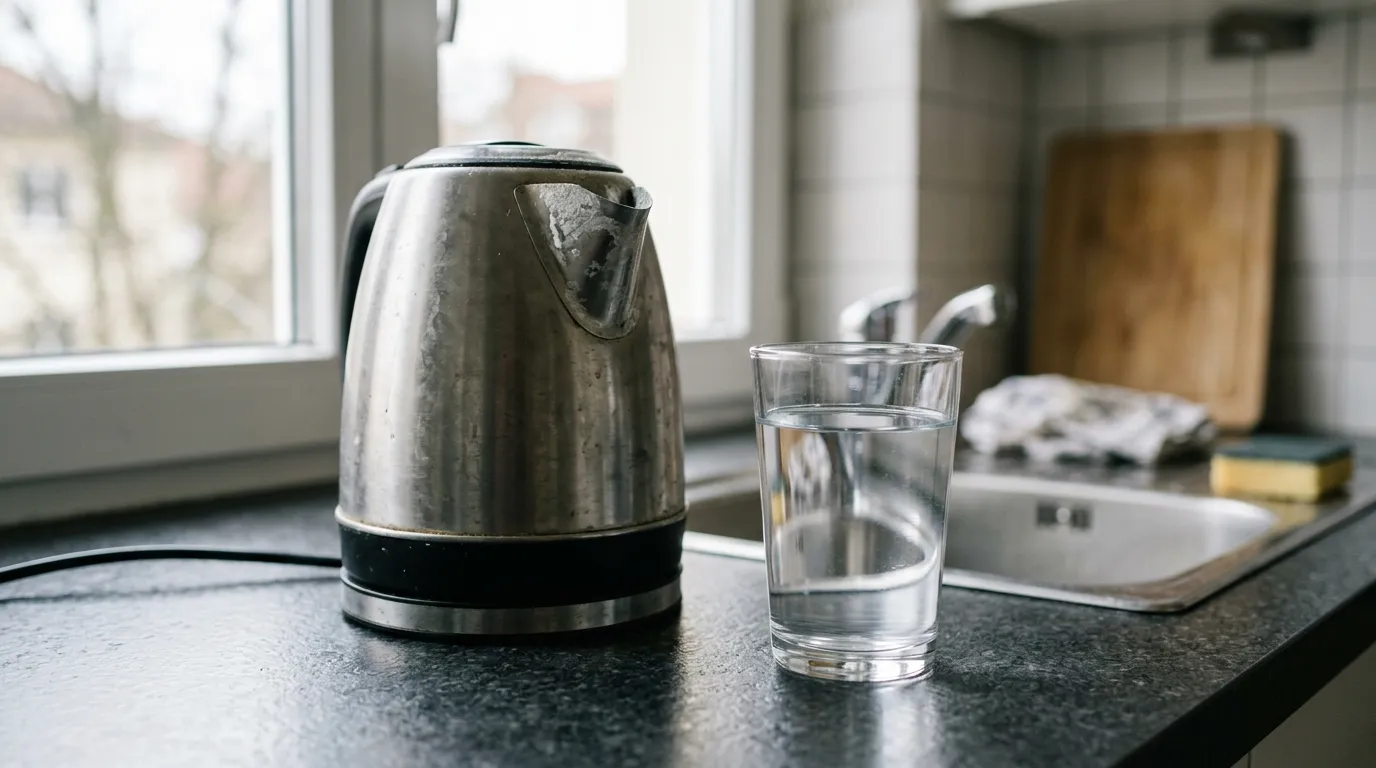
The fastest way to find out whether your water is hard or soft is to enter your postcode on your water company’s hardness checker, which takes about a minute and gives you a figure in mg/l calcium carbonate. If you want to confirm it yourself, drop a cold sample on a hardness test strip and read the colour against the chart in roughly 30 seconds. Most of the South East, London and the Midlands sit in the hard to very hard range, while much of Scotland, Wales and Northern England is soft.
This page covers three ways to check, what the number actually means, and how to read your result against the official UK bands.
The 5-minute check: three methods
You do not need all three. Pick one. If you only want a yes or no answer, the postcode lookup alone is enough.
1. Postcode lookup (about 1 minute)
Every UK water company publishes the hardness of the supply it sends to your area. Find out who supplies your water (it is printed on your bill, or you can search your postcode), then open their water hardness or water quality checker and enter your postcode. You will get a value in mg/l calcium carbonate (often shown as ppm, which is the same thing), and sometimes in Clark degrees or German degrees as well.
This is the method the Drinking Water Inspectorate recommends, because regional maps miss local variation and your supplier holds the exact figure for your zone.
2. Test strip (about 30 seconds)
A hardness test strip is the cheapest physical test and the most reliable quick one. Run the cold tap for a few seconds, fill a clean glass, dip the strip in for a second or two, then hold it against the colour chart on the tub. The pad changes colour according to hardness, and you match it to a band. Strips are accurate enough to tell you which category you fall into, which is all most people need.
3. Soap shake test (about 2 minutes)
If you have nothing to hand, this gives a rough yes or no. Half fill a clear bottle with cold tap water, add around 10 to 15 drops of pure liquid soap (not washing-up liquid or detergent, which lather even in hard water), cap it and shake hard for 10 to 15 seconds.
- Lots of fluffy bubbles and clear water below: your water is probably soft.
- Few bubbles and cloudy, milky water: your water is probably hard.
It is a quick indicator, not a measurement. For an actual number, use a strip or the postcode lookup.
A note on TDS meters: a TDS (total dissolved solids) pen measures electrical conductivity, not hardness specifically. It picks up all dissolved minerals and salts, so a high reading hints at hardness but does not measure calcium and magnesium directly. It is not a true hardness test on its own.
What the number means: UK hardness bands
The Drinking Water Inspectorate uses these bands, measured in milligrams per litre of calcium carbonate (mg/l CaCO₃):
| Classification | Hardness (mg/l CaCO₃ / ppm) |
|---|---|
| Soft | Up to 100 |
| Slightly hard | 100 to 150 |
| Moderately hard | 150 to 200 |
| Hard | 200 to 300 |
| Very hard | More than 300 |
A few reference points worth knowing:
- Scaling (limescale on kettles, heating elements and pipework) tends to start at around 200 mg/l and above.
- Water at 100 mg/l or below is softer and slightly more corrosive to pipework.
- Where a water company artificially softens a supply, it keeps total hardness at a minimum of 150 mg/l, because the calcium and magnesium in water carry possible cardiovascular health benefits.
If your reading came back in different units, here is roughly how they line up with mg/l (ppm):
| Unit | Roughly equals |
|---|---|
| 1 ppm | 1 mg/l CaCO₃ (identical) |
| 1 Clark degree (°e, English) | about 14.3 ppm |
| 1 German degree (°dH) | about 17.8 ppm |
So a supply listed as 14 °Clark is around 200 mg/l, which is the bottom of the hard band.
Signs you already have a hard water answer
You can often tell before you test. Hard water usually shows up as:
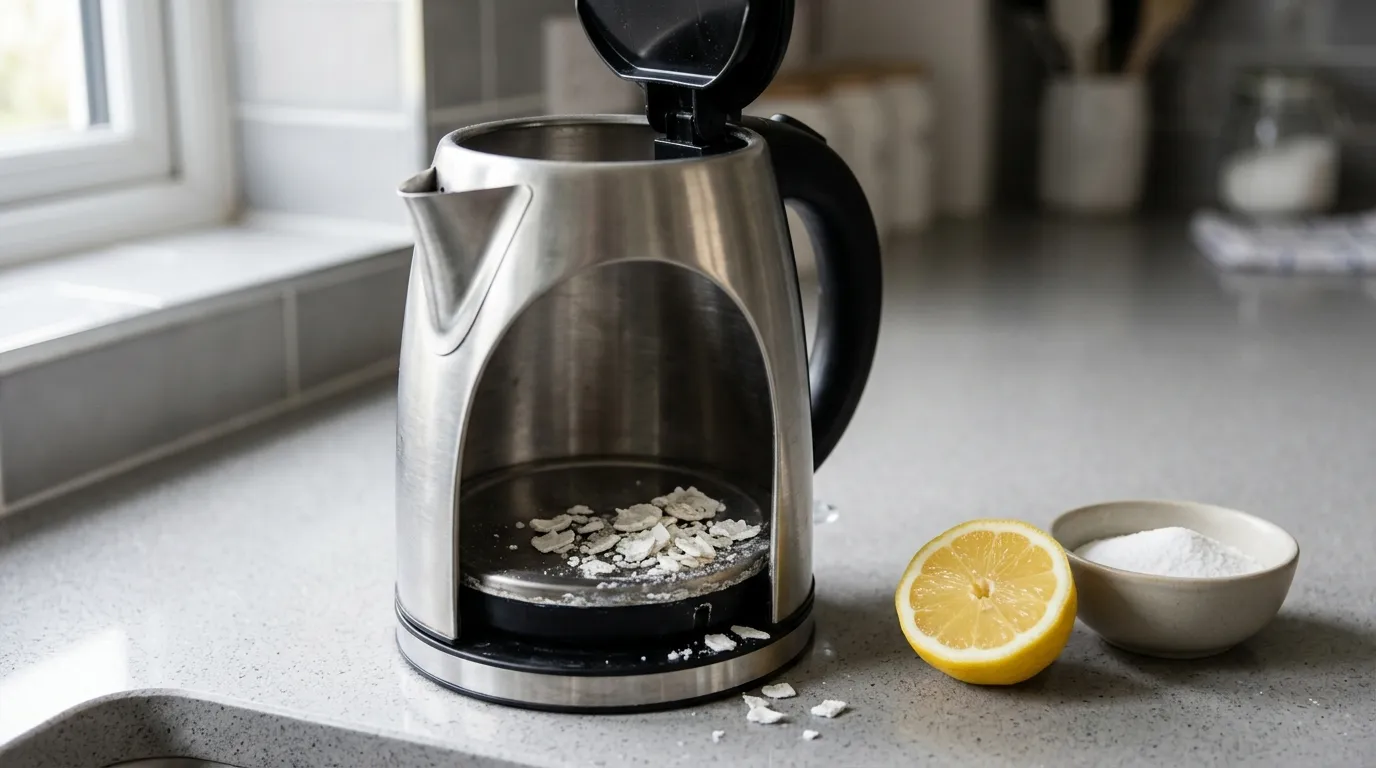
- White, chalky limescale building up inside the kettle and around taps and the showerhead.
- Soap and shampoo that will not lather easily, plus sticky soap scum on basins and tiles.
- Cloudy spots or a filmy residue on glasses and cutlery after washing.
- Skin that feels tight or dry and hair that feels dull after a wash.
Soft water tends to do the opposite: soap lathers freely and feels almost slippery to rinse off, and you see little or no limescale on surfaces and appliances.
These signs confirm the direction, but only a number tells you which band you are in, which matters if you are deciding whether to fit a water softener or scale reducer.
Which method should you trust?
For a quick decision, the postcode lookup is the single most reliable source because it comes from the company that treats and tests your supply. Use a test strip when you want to confirm what comes out of your own tap, for example if you are on a private supply or a borehole, or if you have a softener and want to check it is working. The soap test is a back-pocket trick when you have nothing else, not a result to act on.
Once you know your band, you can work out whether treatment is worth it for your area. If you are in a hard water region, see our guide to water softeners vs scale reducers before you buy anything.
Frequently asked questions
Is my water hard or soft if I live in London? Almost certainly hard or very hard. London, the South East and much of the Midlands draw water through chalk and limestone, which dissolves calcium and magnesium and pushes hardness into the 200 to 300 mg/l range or above. Check your exact figure on your supplier’s postcode tool, as it varies street to street.
What is the difference between hard and soft water? Hard water has dissolved a lot of calcium and magnesium as it passed through rock such as chalk or limestone. Soft water has picked up far less, usually because it flows over harder rock like granite. Hard water leaves limescale and fights soap; soft water lathers easily and leaves little residue.
Is hard water bad for you to drink? No. Hard water is safe to drink and the calcium and magnesium in it may even carry small health benefits. The downsides of hardness are practical: limescale in appliances and pipes, and more soap and detergent needed. See the DWI guidance on water hardness for the full position.
Can I test water hardness without buying anything? Yes. The postcode lookup on your water company’s website is free and gives an exact figure. The soap shake test costs nothing if you have pure liquid soap, but it only tells you the rough direction, not a number.
Why does a TDS meter not tell me if my water is hard? A TDS meter reads electrical conductivity and estimates all dissolved solids, including salts and minerals that have nothing to do with hardness. A high TDS reading often goes with hard water, but it is not measuring calcium and magnesium directly, so it cannot give you a true hardness band. Use a strip or your supplier’s figure instead.
My result is in ppm. Is that the same as mg/l? Yes. For water hardness, 1 ppm equals 1 mg/l of calcium carbonate, so the bands in the table above apply directly. If your figure is in Clark or German degrees instead, use the conversion table to translate it.
How do I find out which water company supplies me? It is printed on your water bill. If you cannot find a bill, search your postcode on Water UK’s supplier finder, then go to that company’s water quality or hardness page to enter your postcode. For a regional view first, our UK water hardness map shows the broad picture by area.