Water Softeners
Water Softener Not Using Salt? 7 Causes and How to Fix Each
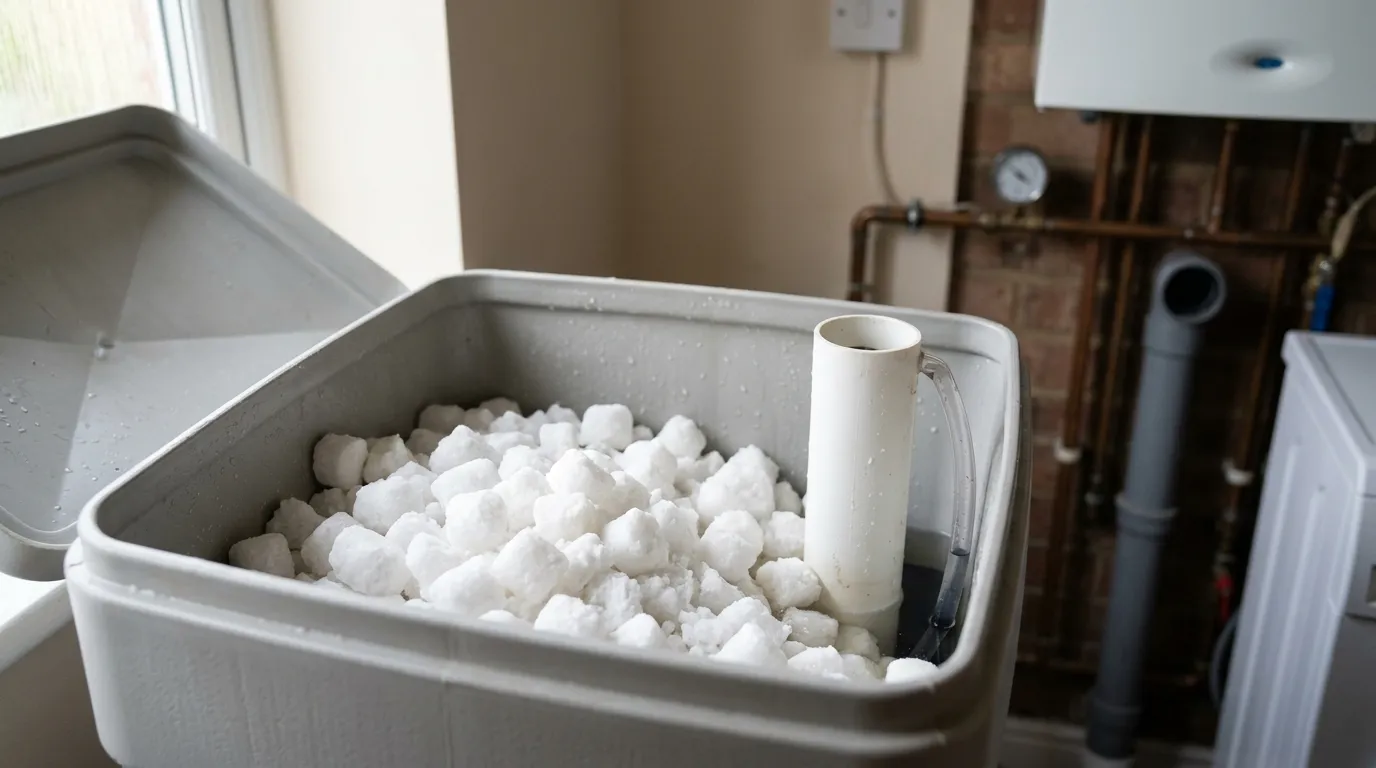
If your water softener is not using salt, the level in the brine tank stays the same week after week, and you are probably noticing limescale and that hard, scummy feel creeping back. In almost every case the cause is a salt bridge (a hard crust of salt floating above an empty pocket), salt mush at the base, or a blocked injector that stops the unit drawing brine during regeneration. The good news: most of these are a 20-minute fix with a broom handle and a bucket, no engineer needed.
Below are the seven causes worth checking, ordered from most common to least, with the exact steps for each.
First, confirm it is actually a problem
Salt does not vanish at a steady rate. A correctly sized softener for an average UK household uses roughly one 25kg bag of tablet salt every four to six weeks, less if you run block salt or live in a softer area. If you last topped up three weeks ago and the level looks high, nothing may be wrong.
Two quick checks before you start pulling things apart:
- Force a manual regeneration. Every softener has a regen button or dial on the control head (check the manual for the model). Start a cycle and watch the brine tank. During the brine draw stage the water level inside the tank should visibly drop over several minutes. If it drops, the softener is using salt and drawing brine correctly. If it does not move, you have a real fault and the sections below apply.
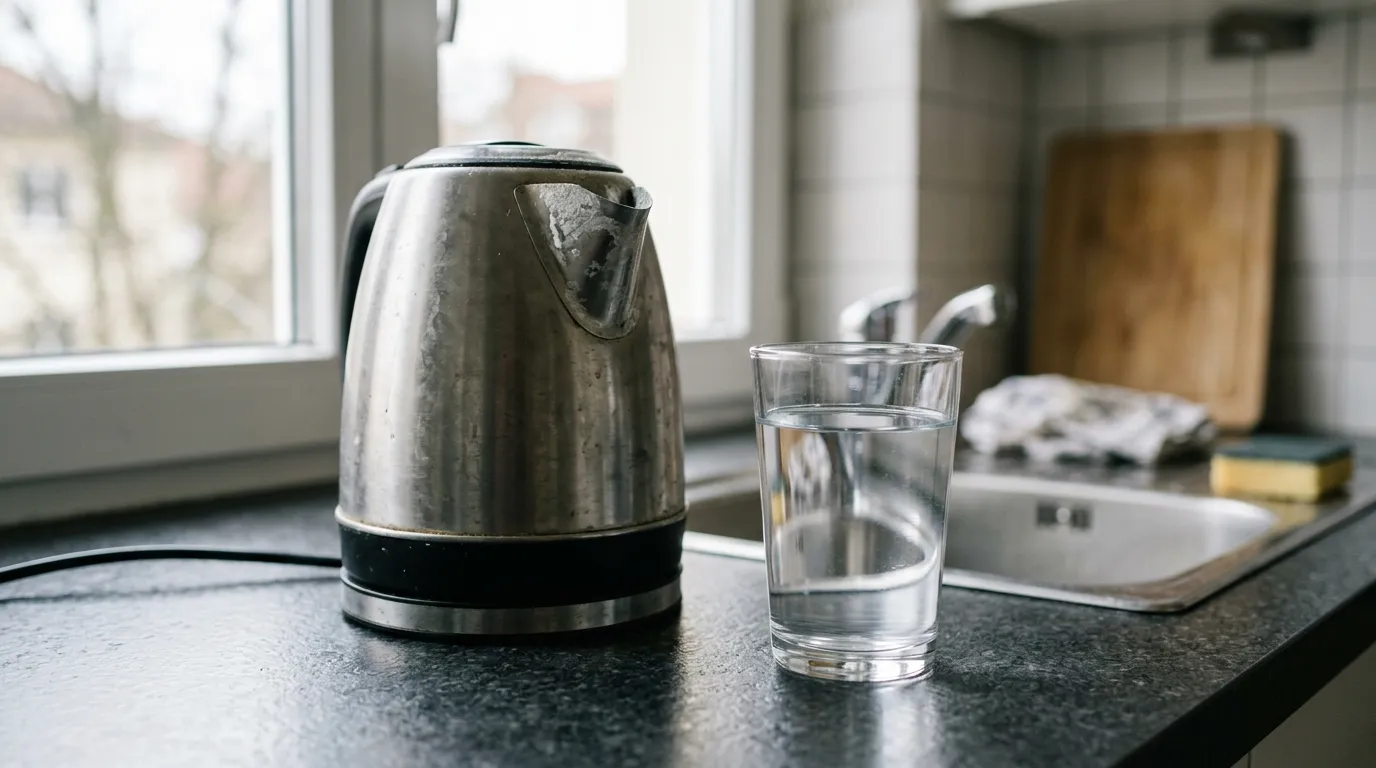
- Check the water is actually hard again. Soap not lathering, white scale on the kettle and taps, and rough laundry all point to the softener not working. You can confirm your baseline hardness by entering your postcode on your water company’s site, or read the Drinking Water Inspectorate’s hardness guide. Most of England and the South East sits in the “hard” to “very hard” band (200 to 300+ mg/l of calcium carbonate).
If the manual regen draws no brine, work through the causes below.
1. Salt bridge (the most common cause by far)
A salt bridge is a solid crust of salt that hardens across the width of the tank, sitting above the water. The tank looks full, but underneath the crust is a hollow gap with water the salt never touches. The softener draws from the water, the brine comes out weak or fresh, and the salt above never falls to dissolve. So the level appears stuck.
Bridges form from humidity (UK utility rooms, garages and under-sink cupboards are prime culprits), temperature swings, overfilling the tank, or cheaper, less pure salt.
How to fix it:
- Bypass the softener or turn off the water supply to it.
- Take a broom or mop handle (wood or plastic, never anything sharp that could pierce the tank) and push gently down into the salt. You will feel it punch through the hard crust into the gap below.
- Tap around the edges to break the bridge into chunks so it falls into the water.
- If the crust is stubborn, pour two to three litres of warm (not boiling) water down the brine well and leave it 45 to 60 minutes to soften, then break it up.
- Once the salt is loose and contacting the water again, run a manual regeneration to get things moving.
To stop it recurring, keep the tank no more than two-thirds full, let the salt run down to roughly a quarter before refilling, and switch to a higher-purity salt.
2. Salt mush at the bottom of the tank
The opposite problem to a bridge. Fine, low-grade or damp salt breaks down into a thick, mushy sludge that settles at the base. This sludge blocks the intake screen and brine pickup, so when the softener tries to draw brine the suction drops and the water just sits there. From the outside, the salt level barely changes.
How to fix it:
- Bypass the softener and scoop out the usable salt above the mush.
- Bail or use a wet/dry vacuum to remove the standing water and the sludge at the bottom.
- Lift out and rinse the brine well and any screen or grid at the base.
- Wash the tank with warm water and a little washing-up liquid, rinse thoroughly.
- Refill with fresh salt and run a manual regeneration.
Mushing is strongly linked to salt quality, so this is a good moment to read our guide on choosing the best salt for your water softener.
3. Wrong salt type for your machine
Some softeners are built for block salt only (you will see two blocks sitting side by side), others for tablet or granular salt (usually a round tank with a lid). Put tablet salt into a block-only machine and it can clump, channel and fail to dissolve properly, so salt sits unused. Use very fine or rock salt where compressed tablets are specified and you invite both bridging and mushing.
| Salt type | Best for | Dissolves | Notes |
|---|---|---|---|
| Block salt | Compact, twin-block machines (e.g. Harvey, Kinetico style) | Slower, steady | Less residue, fewer refills, less prone to bridging |
| Tablet salt | Most cabinet and round-tank softeners | Moderate | Widely available, easy to pour, good all-rounder |
| Granular salt | Specific timer models that specify it | Faster | Can bridge and mush more readily if humidity is high |
How to fix it: Check your softener’s manual for the salt type it specifies, clear out any wrong salt sitting in the tank, and refill with the correct one. Do not mix block and tablet salt in the same tank.
4. Clogged injector or venturi
The injector (also called the venturi or eductor) is a small plastic nozzle inside the control valve that creates the suction to pull brine out of the tank during regeneration. It has a tiny precision hole, and that hole clogs easily with sediment, iron or grit. When it is blocked, the softener cannot draw brine, so no salt is used and hard water returns.
How to fix it:
- Make sure the softener is in service mode, not mid-regeneration, then turn off the water and unplug it.
- Locate the injector cap on the control valve (the manual will show the exact spot) and unscrew it.
- Remove the injector and screen. Rinse under running water and clear the hole with a soft brush or a wooden toothpick. Never use a metal pin or wire, as widening the hole even slightly ruins the calibration.
- For mineral build-up, soak the part in a limescale remover for a few minutes, then rinse.
- Refit everything, restore water and power, and run a manual regeneration.
Cleaning the injector every six months keeps this from coming back.
5. Brine line or float valve fault
The brine line is the thin tube running from the tank to the control valve, and it has to be airtight to create suction. A crack, a loose fitting or a perished seal lets the softener pull air instead of brine, so the salt level never drops. Separately, the float valve (the assembly in the brine well that sets how much water enters the tank) can stick from mineral build-up. Stuck high and the tank overfills with standing water; stuck low and it never fills enough to make brine.
How to fix it:
- Inspect the brine line and every fitting for cracks, kinks or looseness. Push connections firmly home or replace a split tube.
- Lift the float in the brine well by hand. It should move up and down freely. If it is heavy or sticky, clean the stem and cup in warm water to remove the scale weighing it down.
- If you see persistent standing water well above the salt with no salt being used, a stuck float or blocked brine line is the likely culprit.
6. Blocked or kinked drain line
During regeneration, waste water has to flow out through the drain line. If that line is kinked, blocked or (rarely in the UK) frozen in an unheated garage over winter, back pressure stops the softener completing its brine draw. The cycle stalls, brine is never pulled, and water pools in the salt tank.
How to fix it: Trace the drain line from the softener to where it discharges. Straighten any kinks, make sure it is not crushed behind the unit, and confirm the end is not blocked or submerged in a way that creates back pressure. Then run a manual regen and watch that waste water flows freely.
7. Failed timer, motor or control board
If the softener never even starts a regeneration cycle, it cannot use salt. A failed timer, a seized drive motor, a dead control board, or simply a unit knocked off its programme (after a power cut, for example) all produce the same symptom: untouched salt and returning hard water. On older units, around 10 to 15 years and up, worn internal parts and degraded resin can also be behind it.
How to fix it:
- Check the unit has power and the time of day is set correctly. A power cut can wipe the schedule so it never triggers an overnight regen.
- Try a manual regen. If nothing happens at all (no motor sound, no cycle), the control head or motor has likely failed.
- At this point it is a job for the manufacturer or a softener engineer. Weigh the repair against the unit’s age. If it is well over a decade old, replacement is often the sensible call.
Frequently asked questions
How do I know if my water softener is using salt? Run a manual regeneration and watch the water inside the brine tank. During the brine draw stage the level should visibly drop over a few minutes. If it drops, salt is being used. If the level never moves and your salt sits at the same height for weeks while hard water returns, the softener is not drawing brine.
Why is the salt in my water softener not going down? The most common reason is a salt bridge, a hard crust that holds the salt up above the water so it never dissolves. The next most common are salt mush blocking the brine pickup and a clogged injector that stops the unit drawing brine. All three are covered above with fixes.
How long should a bag of water softener salt last? For a typical UK family, expect one 25kg bag of tablet salt to last roughly four to six weeks. Block salt and softer water areas stretch this further. If your salt is lasting far longer than that, the softener may not be regenerating, and you should run the manual checks above.
Should there be water in the bottom of my brine tank? Yes, a few centimetres of brine sitting at the base is normal between regenerations. What is not normal is water rising well above the salt, or the tank filling and never emptying during a cycle. That usually points to a stuck float valve, a blocked drain line or a clogged injector.
Can I just add more salt to fix it? No. Adding salt on top of a bridge or mush only makes the blockage worse. Clear the tank first using the steps above, then refill with fresh salt of the correct type.
Is it safe to drink softened water? The Drinking Water Inspectorate advises providing an unsoftened outlet for drinking purposes, so keep one kitchen tap on the unsoftened mains supply for drinking and cooking, because softeners add a small amount of sodium. This matters for people on a low-sodium diet and for making up infant formula. Most UK installations are plumbed to keep that one tap hard.
When to call an engineer
Work through causes 1 to 6 yourself, as they are mechanical and cheap to resolve. Call a professional if the control board, timer or motor has failed (cause 7), if you find a cracked tank, or if the unit is old enough that the resin has degraded. If you are weighing repair against a new unit, our guide on water softener common problems walks through the symptoms that mean a system is on its way out.