Drinking Water Filters
Reverse Osmosis vs Filter Jug vs Under-Sink: Which Drinking Filter Do You Actually Need?
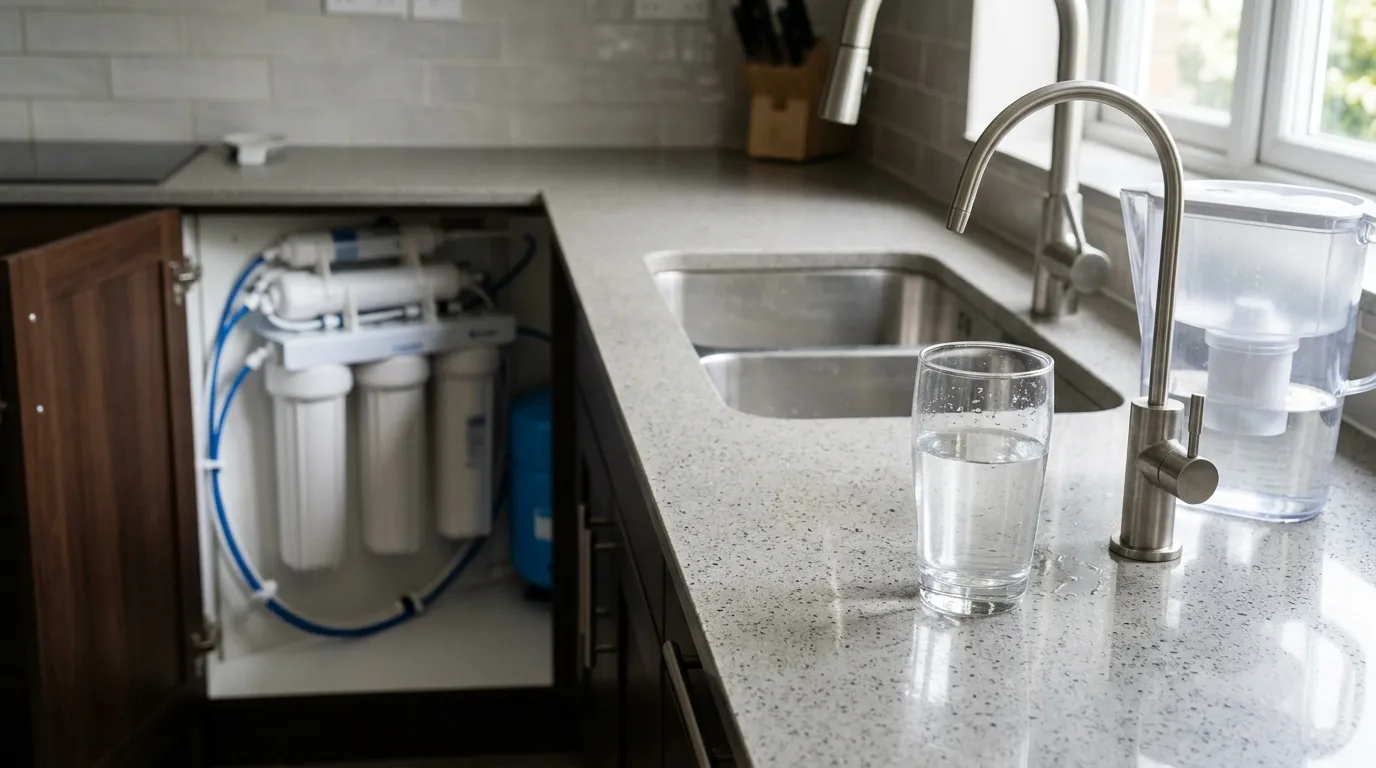
Pick by how much you want removed and how much hassle you accept: a filter jug improves taste and chlorine for very little effort, an under-sink filter does the same job permanently at the tap with far fewer cartridge changes, and reverse osmosis strips almost everything (lead, fluoride, nitrates, limescale minerals) at the cost of slower flow and some wasted water. If your only goal is nicer-tasting water, a jug or under-sink carbon filter is plenty. If you want the most thorough purification possible, reverse osmosis is the answer.
The honest starting point: UK mains water is already very safe. The Drinking Water Inspectorate reports that public supplies in England and Wales pass well over 99.9% of nearly four million tests each year, and the UK ranks joint first in the world for drinking water quality. So a home filter is rarely about safety. It is about taste, limescale, peace of mind over older plumbing, and removing things the regulations do not yet fully cover, such as some PFAS and microplastics.
The three options at a glance
| Filter jug | Under-sink carbon | Reverse osmosis (RO) | |
|---|---|---|---|
| How it works | Water poured through a small cartridge | Mains water passes through a larger cartridge feeding a tap | Mains water forced through a semi-permeable membrane plus carbon stages |
| Best for | Better taste, low commitment | Better taste, on-demand, low upkeep | Maximum contaminant removal |
| Removes chlorine taste/odour | Yes | Yes | Yes |
| Removes lead | Only specific certified cartridges | Yes, if NSF 53 certified | Yes |
| Removes fluoride / nitrates | No | No | Yes |
| Removes limescale minerals | No | No | Yes |
| Installation | None | Plumbed in, fixed tap | Plumbed in, tank and tap, often under-sink |
| Cartridge changes | Roughly every 4 to 8 weeks | Roughly every 6 to 12 months | Carbon stages yearly, membrane every 2 to 5 years |
| Wastes water | No | No | Yes, some water sent to drain |
| Flow speed | Slow, batch by batch | Instant from the tap | Slower, often via a holding tank |
Filter jugs: easy, cheap, limited
A jug is the no-commitment option. You fill it, gravity pulls the water through an activated carbon and ion-exchange cartridge, and you get water that tastes and smells better because the chlorine is gone. Nothing to plumb in, nothing to drill.
The catch is range and lifespan. A standard jug cartridge is certified mainly for aesthetic improvement: chlorine taste and odour, plus some metals like copper and zinc. It does not remove fluoride or nitrates, and most standard cartridges are not certified for lead or microplastics. Some manufacturers now sell upgraded cartridges that are independently certified to reduce lead, PFOA/PFOS and microplastics, but performance drops as the cartridge ages, so the change interval matters. Cartridges typically need swapping every four to eight weeks, which is the most frequent upkeep of the three options.
Choose a jug if you rent, move often, or simply want better-tasting water without tools.
Under-sink filters: the quiet upgrade
An under-sink carbon filter does the same core job as a jug, removing chlorine, sediment and bad tastes, but it is plumbed into your cold supply and feeds a dedicated tap. The cartridge is far larger, so it lasts roughly six to twelve months instead of weeks, and the water is filtered instantly when you open the tap. No jug to refill, no shelf in the fridge.
The better systems use multi-stage cartridges and can reduce a wider set of contaminants than a jug, including lead, mercury, certain VOCs and microbial cysts, but only if the cartridge is independently certified for those things. This is where certification numbers matter. A unit certified to NSF/ANSI 42 covers taste, odour and chlorine. NSF/ANSI 53 covers health-related contaminants such as lead, mercury and VOCs. If lead is your concern, look specifically for an NSF 53 lead claim, not just “NSF certified”.
What an under-sink carbon filter does not do is remove dissolved minerals. It will not soften your water or stop limescale in your kettle. For that you need either reverse osmosis or a separate softener.
Choose under-sink if you own your home, want filtered water on tap with minimal fuss, and care about taste plus a defined list of contaminants rather than total purification.
Reverse osmosis: the thorough one
Reverse osmosis pushes water through a membrane with pores so fine that almost nothing gets through. Combined with carbon pre and post-filters, a good RO system removes the broadest range of anything you can buy for a home: chlorine, lead, fluoride, nitrates, arsenic, heavy metals, PFAS, pesticides and the calcium and magnesium that cause limescale. Independent certification for RO systems falls under NSF/ANSI 58, which validates reduction of total dissolved solids along with contaminants like nitrate, lead and fluoride.
There are three trade-offs to understand before you buy.
First, it wastes water. RO produces a stream of “reject” water that goes to the drain. Older units waste a lot; modern high-efficiency systems are much better, but there is always some loss. Look at the pure-to-waste ratio when comparing models.
Second, it strips beneficial minerals too. Because RO removes nearly everything, it also removes calcium and magnesium, which leaves the water mildly acidic, often around pH 5.5 to 6.5, and flat-tasting to some palates. Many systems add a remineralising cartridge that puts a small amount of mineral content back and lifts the pH towards neutral. If taste and minerals matter to you, buy a system that includes one.
Third, it is the most involved to fit and maintain. RO usually means an under-sink unit with a separate tap and sometimes a storage tank, and flow from the tap is slower than a standard filter. Carbon stages are replaced roughly yearly and the membrane every two to five years.
Choose RO if you want the most complete purification available, live in a hard water area and want limescale-free drinking water, or have a specific concern like fluoride, nitrates or PFAS that the other two cannot touch.
The limescale question
A point that trips up a lot of UK buyers: limescale is a hard water problem, and most filters do not fix it. Hard water is common across southern and eastern England, where the ground is chalk and the water carries a lot of dissolved calcium and magnesium. Scotland and the north and west are generally softer.
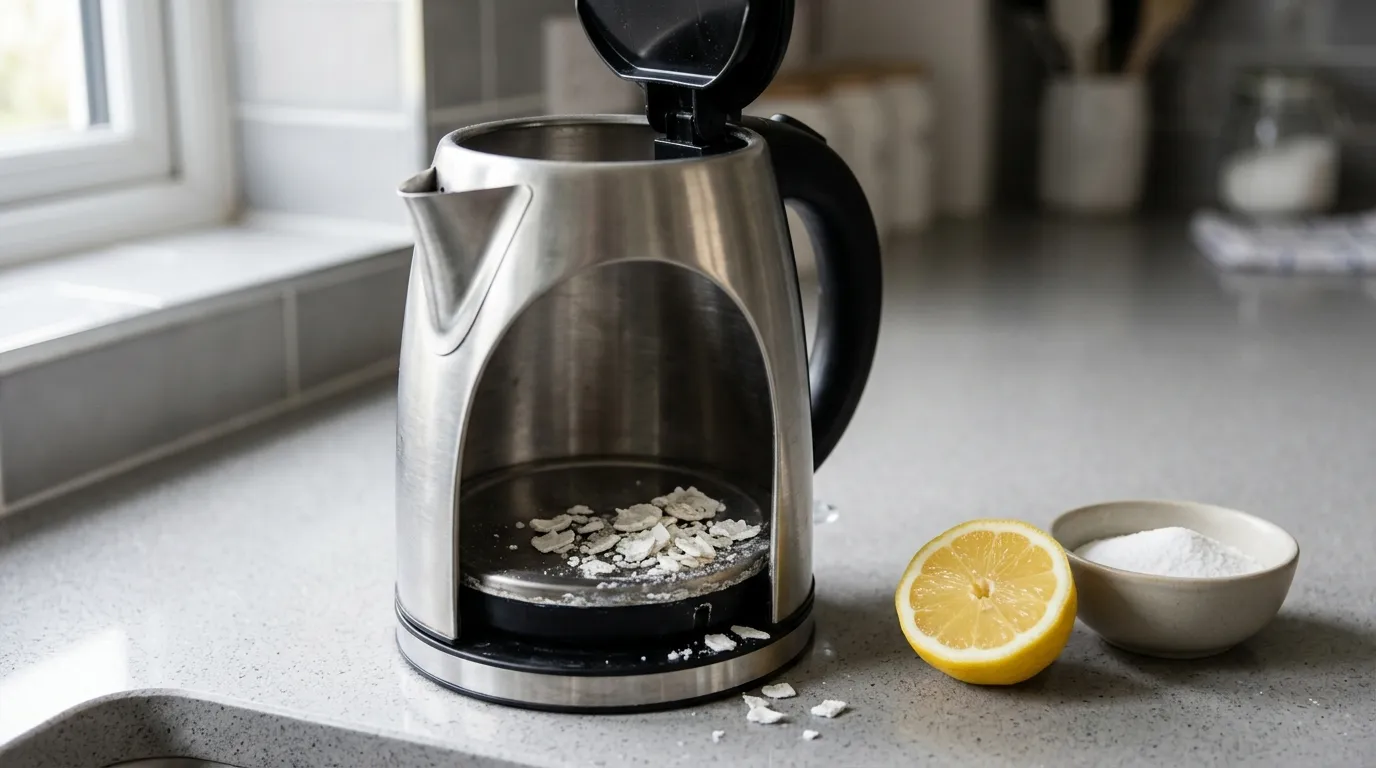
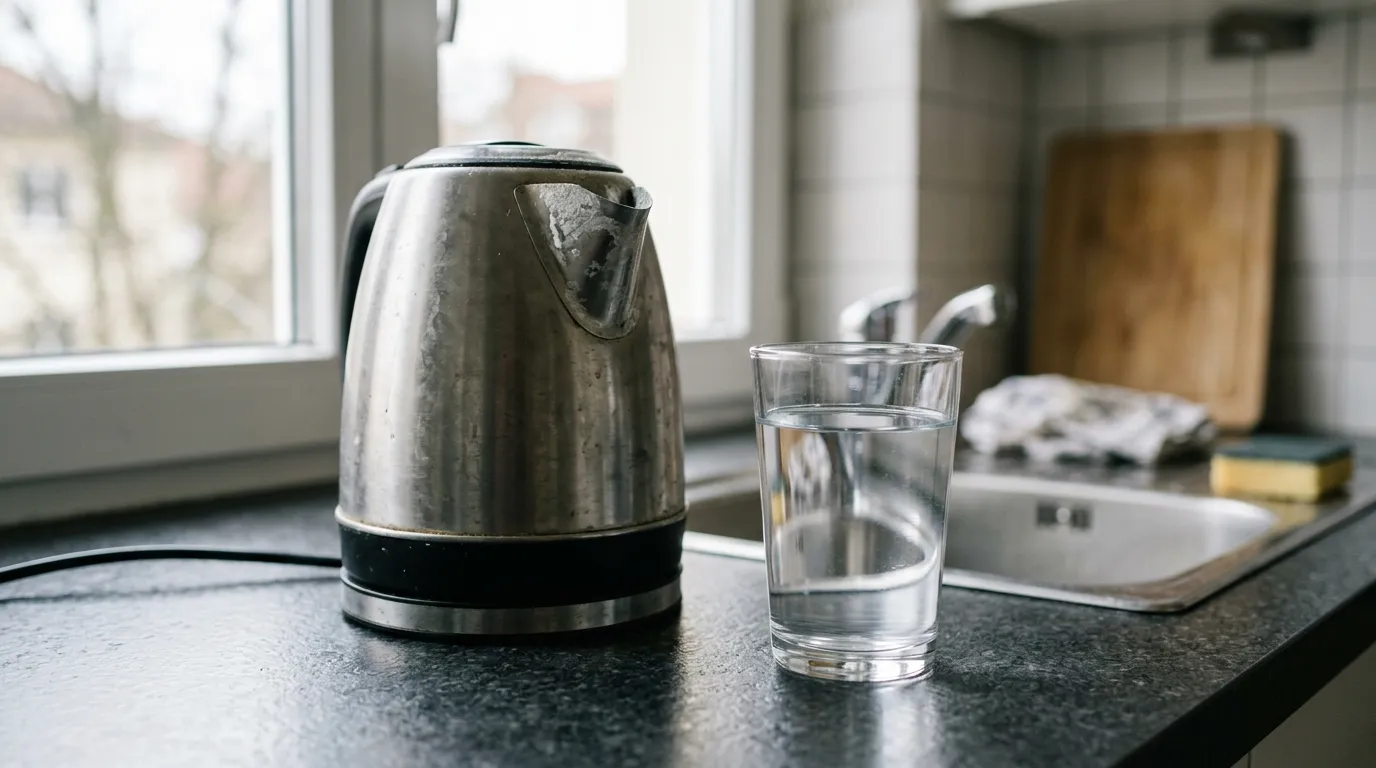
A jug or carbon under-sink filter improves taste but leaves those minerals in, so your kettle still furs up. Only reverse osmosis removes the minerals from your drinking water, and only a whole-house water softener removes them from every tap, shower and appliance in the home. If your real complaint is scale on the kettle and white marks on the glasses, read our guide to water softeners vs filters before you spend anything, because a drinking filter alone will not solve it.
You can check whether you live in a hard water area using your water company’s postcode tool, and you can read more about hardness and why it matters on the DWI website.
What about lead, PFAS and microplastics?
These are the contaminants people worry about most, and they are the ones where the cheap options fall short.
Lead does not come from the treatment works; it leaches from old pipes inside or just outside the property. Homes built before 1970 may still have lead service pipes or internal plumbing. If you suspect lead, your water company will usually test the water at your kitchen tap for free, and many run schemes to help replace the pipe. You can read the official guidance on lead in drinking water from the DWI. To remove lead at the tap, you need an under-sink filter with a specific NSF 53 lead certification, or reverse osmosis.
PFAS (so-called forever chemicals) and microplastics are not fully captured by current UK testing rules. Standard jug and carbon filters are generally not certified to remove them. Reverse osmosis is the most reliable home method, and some specialist certified cartridges target PFAS specifically. If this is your reason for buying, check the exact certification rather than the marketing.
How to choose, quickly
- You rent or want zero installation: filter jug, and buy a certified upgraded cartridge if you care about more than taste.
- You own your home and want better-tasting water on tap with little upkeep: under-sink carbon filter, NSF 42 for taste, NSF 53 if you also want lead removed.
- You want the most thorough purification, live with hard water, or have a specific concern like fluoride, nitrates or PFAS: reverse osmosis, ideally with remineralisation.
- Your real problem is limescale everywhere, not just drinking water: a water softener, possibly alongside a small RO unit for drinking.
Still weighing up the upkeep? Our breakdown of filter cartridge running costs compares how often each system needs servicing over a few years.
Frequently asked questions
Is reverse osmosis better than a filter jug? For removing contaminants, yes, by a wide margin. RO removes lead, fluoride, nitrates, limescale minerals and PFAS that a standard jug leaves behind. But it costs more, needs installation, wastes some water and is overkill if your only goal is better-tasting water. For taste alone, a jug or carbon under-sink filter is enough.
Do I actually need a water filter in the UK? Not for safety in most cases. UK mains water already meets strict standards and passes over 99.9% of tests. People filter for taste, to reduce chlorine, for peace of mind in older homes with possible lead pipes, or to remove things like PFAS and microplastics that current rules do not fully cover.
Does reverse osmosis remove limescale? Yes, from your drinking water. RO removes the dissolved calcium and magnesium that form limescale, so an RO tap will not fur up your kettle. It does not protect the rest of the house though; for that you need a whole-house water softener.
Why does reverse osmosis waste water? The membrane works by separating clean water from a concentrated reject stream that carries the contaminants away to the drain. Older systems waste a lot; modern high-efficiency models are far better. Check the pure-to-waste ratio when comparing units.
Does a filter jug remove lead? Standard jug cartridges usually do not. Only specific upgraded cartridges that carry an independent NSF 53 lead certification are designed to reduce lead, and their performance falls as the cartridge ages, so timely changes matter. For reliable lead removal, choose an NSF 53 under-sink filter or reverse osmosis.
Is RO water bad for you because it removes minerals? The minerals you get from drinking water are a small part of your overall intake, so for most people this is not a health issue. RO water can taste flat and is mildly acidic though, which is why many systems add a remineralising cartridge to put a little mineral content back and lift the pH towards neutral.
How often do I change the filters? Jug cartridges roughly every four to eight weeks, under-sink carbon cartridges roughly every six to twelve months, and RO systems need their carbon stages replaced about yearly with the membrane every two to five years. Hard water and heavy use shorten these intervals.
The bottom line
Match the tool to the actual problem. Filter jug for cheap, effortless better taste. Under-sink carbon for the same thing made permanent and lower-maintenance, with NSF 53 if you want lead gone too. Reverse osmosis when you want everything stripped out, including limescale minerals, fluoride, nitrates and PFAS, and you accept slower flow and a little waste. UK tap water starts from a high baseline, so buy the filter that fixes your specific concern rather than the most expensive box on the shelf.
VERIFICATION NOTES (not part of the article):
The article was already clean. No changes were made. Verdict: ok.
Fact-checks performed against UK-market sources: - “well over 99.9% of nearly four million tests” — DWI 2024 annual report shows 99.97% overall compliance. Accurate. - “UK ranks joint first in the world for drinking water quality” — Confirmed (Yale EPI safe-drinking-water score 100, joint first). Accurate. - NSF/ANSI 42 (taste, odour, chlorine), 53 (lead, mercury, VOCs, cysts), 58 (RO, total dissolved solids, nitrate, lead, fluoride) — all correctly described. No invented certification numbers. - RO pH “around 5.5 to 6.5” — sources put RO water at pH 5.0 to 6.5; the article’s range is conservative and within bounds. Accurate. - “Homes built before 1970 may still have lead service pipes” — lead plumbing was banned in the 1970s in the UK; “before 1970” is accurate and appropriately cautious. - Hard water geography (chalk southern/eastern England hard; Scotland, north and west softer) — geologically accurate. - “PFAS and microplastics not fully covered by current UK testing rules” — correct as of May 2026: a statutory PFAS limit is still under consultation (PFAS Plan announced Feb 2026, not yet law) and there is no microplastics standard. - Cartridge-change intervals — standard industry figures, reasonable.
Lint results (all clean): - Em/en dashes (and figure dash, minus sign, horizontal bar): none present anywhere, including frontmatter and tables. Only standard ASCII hyphens in compound words (under-sink, semi-permeable, multi-stage, etc.), which are correct. - Spelling: UK throughout (odour, remineralising). No US spellings. - Prices: none. No £ or $ figures or cost claims anywhere. - Fabricated links / product IDs: none. Two relative internal links (/water-softener-vs-filter, /filter-cartridge-running-costs) and two external DWI links (https://www.dwi.gov.uk/ and https://www.dwi.gov.uk/lead-in-drinking-water/), both verified live and correct. No invented product names or SKUs. - AI cliches: none of delve, seamless, robust, elevate, unlock, “when it comes to”, “that said”, moreover, etc.
Requirements met: - “## Frequently asked questions” section present. - At least one internal link present (two: /water-softener-vs-filter and /filter-cartridge-running-costs). - Frontmatter intact and unchanged.