Limescale & Hard Water
Hard Water vs Soft Water: What’s the Difference and Why It Matters
Hard water and soft water differ by one thing: how much dissolved calcium and magnesium the water carries. That single variable decides whether your kettle furs up in a fortnight, whether soap lathers or leaves scum, and whether your boiler quietly loses efficiency every year. Around 60% of UK households, roughly 17 million homes, sit in hard water areas, so this is not a niche concern. This guide explains the real difference, how UK hardness is classified and measured, where the hard water sits geographically, what it actually costs you, and the treatment options that get muddled most often.
The core difference
Rainwater starts soft. It becomes hard when it filters through chalk and limestone, which are largely calcium carbonate, and dissolves calcium and magnesium minerals on the way to the aquifer. Water that travels over hard, impermeable rock like granite or slate picks up far fewer minerals and stays soft.
So the distinction is mineral content:
- Hard water is high in dissolved calcium and magnesium. It is what leaves limescale (the chalky white deposit) on kettles, taps, shower screens and inside boilers and pipes. It also reacts with soap to form scum and reduces lather.
- Soft water is low in those minerals. Soap lathers readily, you use less detergent, and there is little to no scale build-up. Naturally soft water (and artificially softened water) often feels slightly slippery on the skin.
Hard water is not dirty or unsafe. It is simply mineral-rich, and those minerals come from geology, not contamination.
How UK water hardness is classified
The Drinking Water Inspectorate (DWI) classifies hardness by the concentration of calcium carbonate (CaCO₃), measured in milligrams per litre (mg/l). One part per million (ppm) is the same as 1 mg/l CaCO₃, so the two units are interchangeable.
| Classification | Hardness (mg/l CaCO₃, equal to ppm) |
|---|---|
| Soft | up to 100 |
| Slightly hard | 100 to 150 |
| Moderately hard | 150 to 200 |
| Hard | 200 to 300 |
| Very hard | over 300 |
Source: Drinking Water Inspectorate, Water hardness.
One fact most “difference” articles leave out: there is no legal limit on hardness in UK tap water. The DWI states plainly that “the Drinking Water Directive and the UK drinking water quality regulations do not specify standards for hardness, calcium or magnesium.” Hardness is a practical and comfort issue, not a safety standard.
The DWI does cite World Health Organization 2017 guidance for context: water at 200 mg/l CaCO₃ or above tends to produce scale, while water at 100 mg/l CaCO₃ or below is more corrosive to pipework. Where a water company artificially softens supply before delivery, the DWI recommends keeping a minimum total hardness of 150 mg/l CaCO₃.
Measurement units you will see on kits and softeners
Test strips, drop kits and softener manuals do not all use the same units, which causes a lot of confusion. These are the standard conversions:
| Unit | Equivalent |
|---|---|
| 1 ppm | 1 mg/l CaCO₃ |
| 1 French degree (°fH) | 10 mg/l CaCO₃ (10 ppm) |
| 1 Clark / English degree (°Clark, °e) | 1 grain CaCO₃ per imperial gallon, about 14.254 ppm |
| 1 German degree (°dH) | 10 mg/l CaO, about 17.848 ppm |
These are well-established conversions rather than a single regulated standard, but they are consistent across hardness calculators and reference sources. If your softener manual talks in °Clark and your test kit reports ppm, this table lets you reconcile them.
Where hard and soft water sit in the UK
Hardness follows geology, so it maps closely onto the underlying rock. If you want a precise figure, the most reliable route is a postcode lookup, which is why we keep a separate water hardness checker.
In broad terms:
- Hardest areas: South East England, London, Essex, Surrey, Hertfordshire, the Midlands, eastern Wales and Lincolnshire. These sit on chalk and limestone. Parts of the South East regularly exceed 300 ppm, putting them in the “very hard” band.
- Softest areas: Scotland (Edinburgh, Glasgow, Aberdeen), much of Wales (Cardiff, Swansea), North West England (Manchester, Liverpool), South West England (Exeter) and Northern Ireland. The granite and slate underneath these regions release fewer minerals.
If you are not sure which side of the line you fall on, see is my water hard or soft for the quick ways to tell.
Why it matters: limescale, appliances and cost
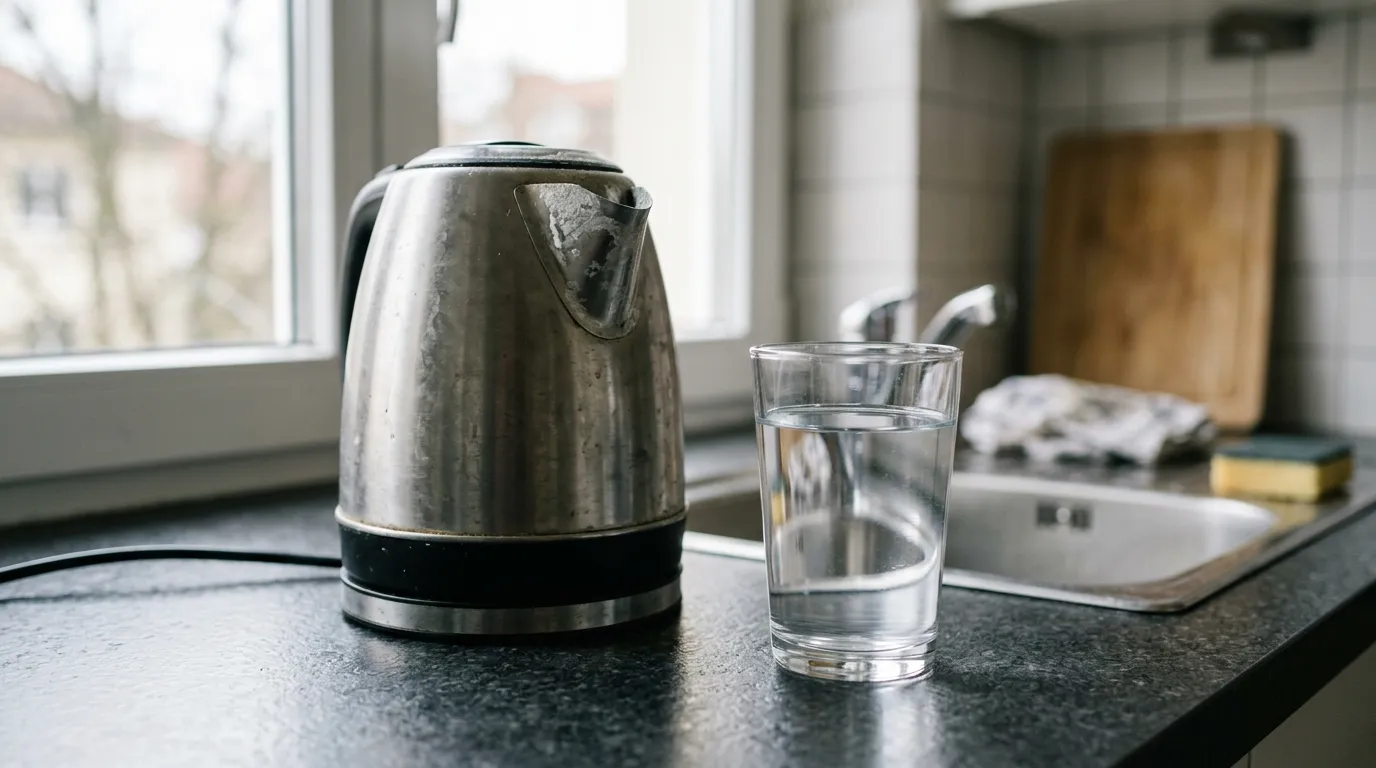
The practical case against hard water is scale. As hard water is heated, calcium carbonate comes out of solution and deposits as limescale inside kettles, immersion heaters, boilers, dishwashers and washing machines. Scale is a poor conductor of heat, so a coated heating element has to work harder to deliver the same warmth.
The figures most often quoted come from industry bodies:
- The Carbon Trust figure, as reported by water-treatment companies, is that a 1mm layer of limescale increases the energy input a boiler needs by about 7% for the same heat output.
- British Water, again as reported by industry sources, puts the loss at roughly 12% heating efficiency for every 1.6mm of scale in a heating system.
We could not load the primary Carbon Trust or British Water documents to verify these directly, so treat them as figures attributed to those bodies rather than confirmed first-hand. The mechanism behind them, scale insulating a heating element, is sound and well understood.
Beyond running costs, scale shortens appliance life. Some industry sources report that hard-water households can end up replacing boilers, dishwashers and washing machines more often than homes in soft-water areas. You may also see claims of a meaningful annual jump in energy costs from limescale; those are vendor estimates from companies selling softeners and conditioners, not independent figures, so weigh them with that in mind.
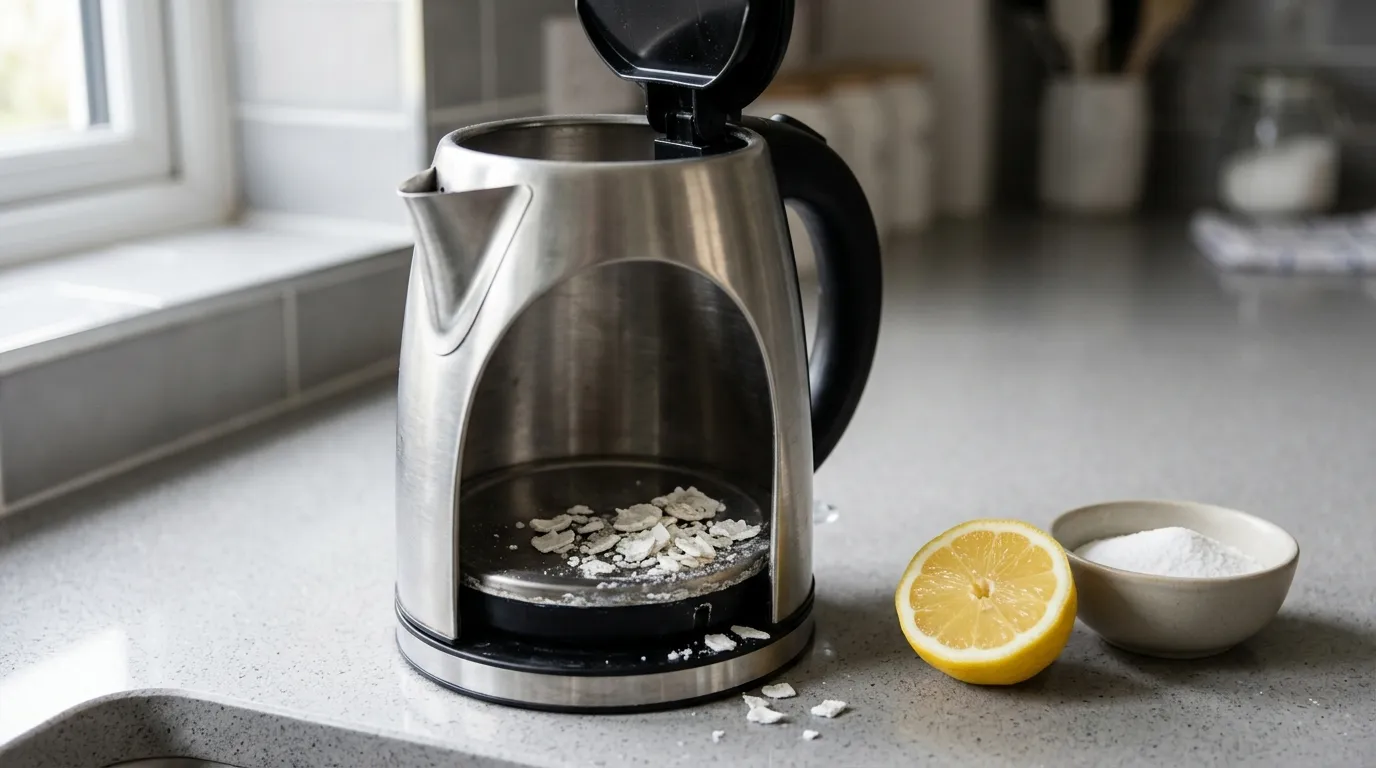
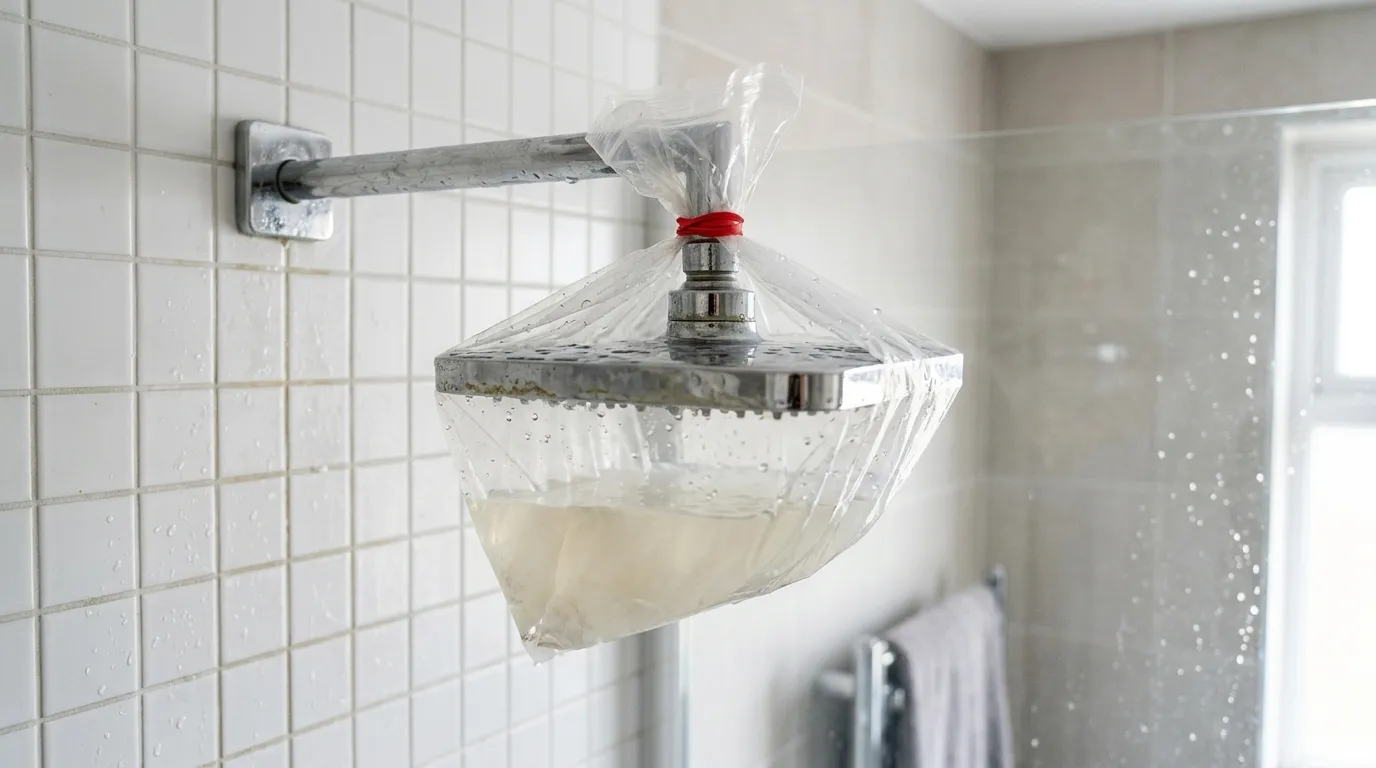
For day-to-day descaling rather than whole-house treatment, see how to descale a kettle in a hard water area and how to remove limescale from a shower head.
Is hard water bad for you?
No. Hard water is not a health hazard, and it can contribute a small amount of dietary calcium and magnesium. Two water-quality engineers writing in The Conversation set out the balanced picture, and McGill University’s Office for Science and Society reaches the same conclusion: hard water is safe to drink.
The downsides are about comfort rather than health. Hard water can aggravate dry skin and conditions such as eczema and psoriasis, leaves soap scum on baths and shower screens, and produces spots on glassware. Softened water lathers more easily, needs less soap and detergent, and feels slippery on the skin, which some people like and some do not.
Treatment: softener vs conditioner vs scale inhibitor
This is where vendor marketing blurs important distinctions. The three main approaches do genuinely different things:
| Approach | What it does | How it works | Notes |
|---|---|---|---|
| Salt-based ion-exchange softener | Removes hardness | Swaps calcium and magnesium for sodium across a resin bed, regenerated with salt | Gives the classic “soft” slippery feel; needs salt and regeneration; adds sodium to the water |
| Salt-free conditioner (TAC/SAC) | Does not remove hardness | Converts minerals to stable micro-crystals that do not stick to surfaces | No salt or electricity; the minerals are still present |
| Scale inhibitor (cartridge, magnetic or phosphate dosing) | Does not soften or remove existing scale | Slows the formation of new scale, usually at the point of entry | Will not undo scale that is already there |
Only a salt-based softener actually takes the calcium and magnesium out. A salt-free conditioner leaves the minerals in the water but changes their form so they are less likely to deposit. A scale inhibitor simply slows new scale forming. If a product is marketed as a “salt-free softener,” read it as a conditioner: it is not removing hardness. For a fuller comparison of models and types, see the best water softeners in the UK.
A few real UK salt-based softeners give a sense of the category. The Harvey TwinTec S4 and Kinetico Premier Compact are both non-electric twin-tank block-salt softeners that regenerate in around 11 minutes; the BWT WS555 is an electric model whose electronic control adapts regeneration to your actual water use to cut salt consumption. Model names and specs quoted on review and retailer pages should be confirmed against the manufacturer’s own site (twintec.com, kinetico.co.uk, bwt.com) before you buy, and prices change, so check the current price directly.
Regulation and the separate drinking tap
If you fit a mains-connected ion-exchange softener, it must comply with the Water Supply (Water Fittings) Regulations 1999. British Water’s Code of Practice recommends keeping a mains-fed, unsoftened tap for drinking and cooking where it is reasonably practicable, which is the origin of the common advice to leave the kitchen cold tap unsoftened.
The reason is sodium. Ion-exchange softening adds sodium to the water, and the DWI advises against softening the drinking and cooking tap. Excess sodium is a particular concern for premature babies, whose kidneys cannot handle it, and for anyone on a low-sodium diet. Softened water is only considered suitable for making up baby formula if its sodium content is below 200 mg/l, and the NHS advises using the unsoftened tap for formula to be safe. Softened water can also be slightly more aggressive to plumbing, with some potential to leach copper or lead, which is a further reason to keep an unsoftened tap for what you drink.
Frequently asked questions
What is the difference between hard water and soft water? Hard water contains high levels of dissolved calcium and magnesium picked up from chalk and limestone; soft water contains very little. Hard water leaves limescale and soap scum and reduces lather, while soft water lathers easily and leaves little or no scale.
Is hard water safe to drink? Yes. Hard water is not a health hazard and can even contribute a small amount of dietary calcium and magnesium. There is no legal limit on hardness in UK tap water; the issues it causes are about scale, comfort and appliance wear rather than safety.
Can you drink softened water, and is it safe for babies? Adults can generally drink softened water, but it contains added sodium from the softening process. The DWI advises not softening the kitchen drinking tap, and the NHS recommends using unsoftened tap water for baby formula. Softened water is only considered suitable for formula if its sodium level is below 200 mg/l.
Which parts of the UK have hard water? Roughly 60% of UK households are in hard water areas, concentrated in the South East, London, Essex, Surrey, Hertfordshire, the Midlands, eastern Wales and Lincolnshire, where chalk and limestone push hardness over 300 ppm in places. Scotland, much of Wales, North West and South West England and Northern Ireland are generally soft.
Do I need a separate tap if I install a water softener? British Water’s Code of Practice recommends keeping a mains-fed, unsoftened tap for drinking and cooking where practicable, and mains-connected softeners must meet the Water Supply (Water Fittings) Regulations 1999. The usual setup leaves the kitchen cold tap unsoftened so you are not drinking the added sodium.
Does a salt-free “softener” actually soften water? No. Salt-free conditioners (TAC or SAC systems) do not remove calcium and magnesium; they change the minerals into stable crystals that are less likely to stick as scale. Only a salt-based ion-exchange softener actually removes hardness. Scale inhibitors do neither: they only slow new scale forming.