Drinking Water Filters
How Often Should You Change an Under-Sink Filter Cartridge?
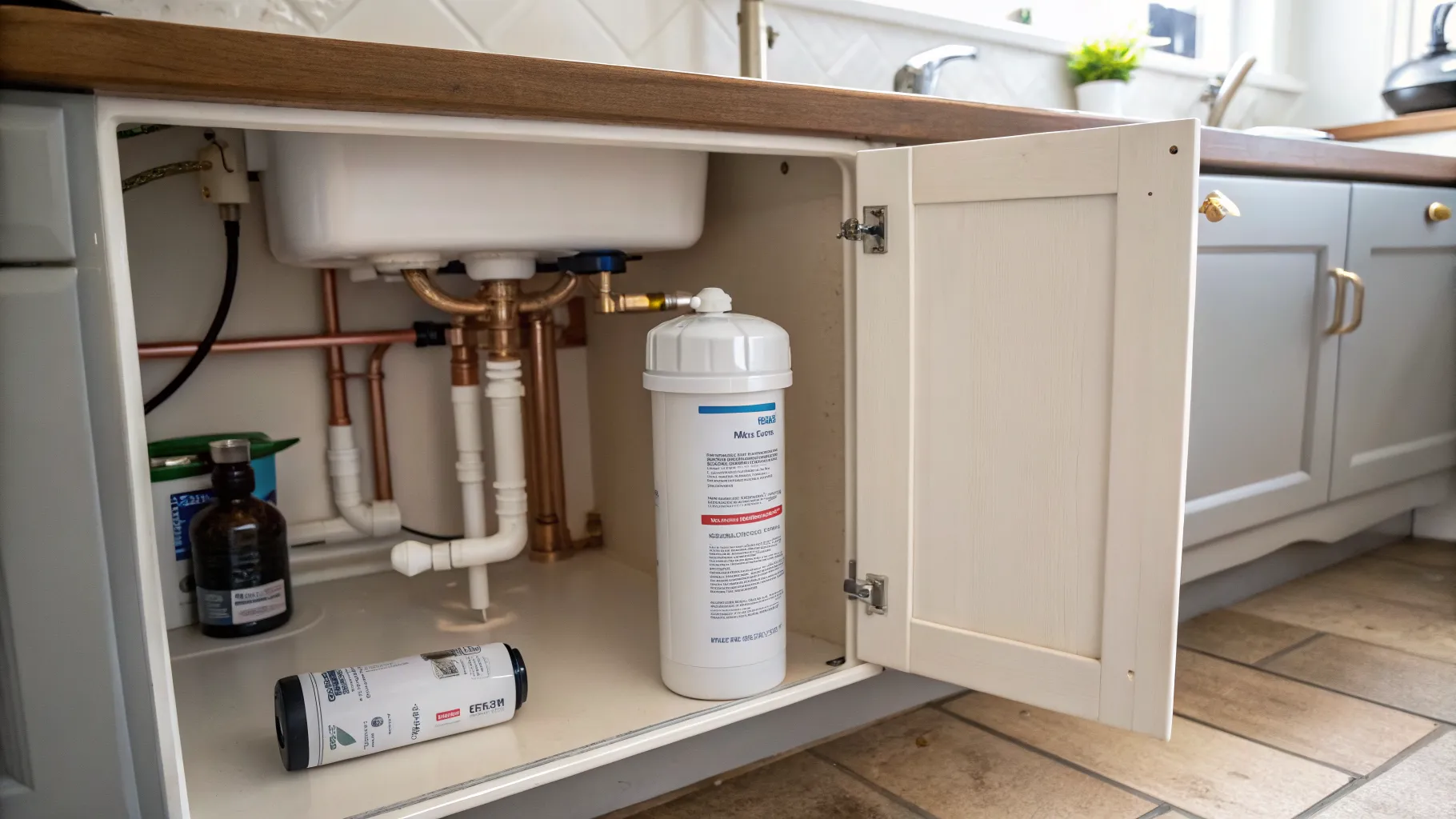
Change an under-sink filter cartridge every 6 to 12 months for a standard carbon or ceramic-carbon type, and every 3 to 4 months for an anti-scale stage in a hard-water area. That is the short answer. The longer answer matters, because an under-sink filter cartridge is rated by both time and litres, whichever runs out first, and a household in hard-water Kent will get through one far faster than a low-use flat in soft-water Manchester. Run a cartridge past its life and it stops protecting you; left long enough, it can make your water worse than the unfiltered tap.
This guide gives UK-specific intervals by cartridge type, the signs your cartridge is spent, and why hard water and household size shift the schedule.
How often to change each cartridge type
Most under-sink systems are not a single filter. They are a stack of stages, and each stage has its own life. Here is the realistic UK interval for each:
| Cartridge / stage | Typical change interval |
|---|---|
| Activated-carbon block | 6 to 12 months |
| Ceramic-carbon candle (e.g. Doulton UltraCarb) | About 6 months |
| Sediment pre-filter | 6 to 12 months |
| Anti-scale / limescale-reduction cartridge | About every 3 months in hard water |
| RO sediment and carbon pre-filters | 6 to 12 months |
| RO carbon post / polishing filter | About 12 months |
| RO membrane | 2 to 3 years (less in hard water) |
A common UK under-sink candle, the Doulton UltraCarb 9501, is rated to last around 6 months with regular use. It reduces chlorine, sediment, lead and other heavy metals, bacteria and cysts, and is NSF-certified to NSF/ANSI 401 for 99.9% reduction of microplastics. A higher-capacity plain carbon block may stretch to a year. The anti-scale stages draw the short straw: Doulton’s Limescale Reduction Cartridge (9A04), a WRAS-approved ion-exchange pre-filter, is meant to be changed about every 3 months depending on water quality, and ion-exchange resin cartridges in general exhaust in roughly 3 to 4 months in hard areas.
So if someone tells you “change it once a year” as a flat rule, they are usually talking about a single carbon cartridge in soft water. Match the interval to the stage in front of you.
Litres or months, whichever comes first
Every reputable cartridge carries a rated service capacity in litres or gallons alongside its time rating. Granular activated-carbon under-sink units are commonly rated for a few thousand litres, and some brands sell cartridges graded explicitly by litres, such as 200, 350 and 500 litre variants.
This is the part most pages get wrong: the rating is whichever limit you hit first, not whichever you prefer. A busy family of five drinking, cooking and filling kettles from the filtered tap will reach the litre limit well before the calendar date. A couple who use the tap lightly will hit the time limit first. Do not run a 6-month cartridge for fourteen months because “we barely use it,” and do not assume a litre-rated cartridge is fine at month ten if you have been filling jugs all day.
If you are weighing an under-sink unit against simpler options, the running cost of cartridges is a fair part of the decision; our comparison of reverse osmosis vs jug vs under-sink covers how the maintenance differs, and a water filter jug is worth considering if your usage is genuinely low.
Signs your cartridge needs changing
You do not have to rely on the calendar alone. Watch for these:
- Slower flow at the filtered tap. Clogging is the clearest early sign; the cartridge is full of trapped sediment.
- Taste or smell of chlorine returning, or a metallic or plastic taste creeping back in.
- Visible particles or discolouration in a clean glass of filtered water.
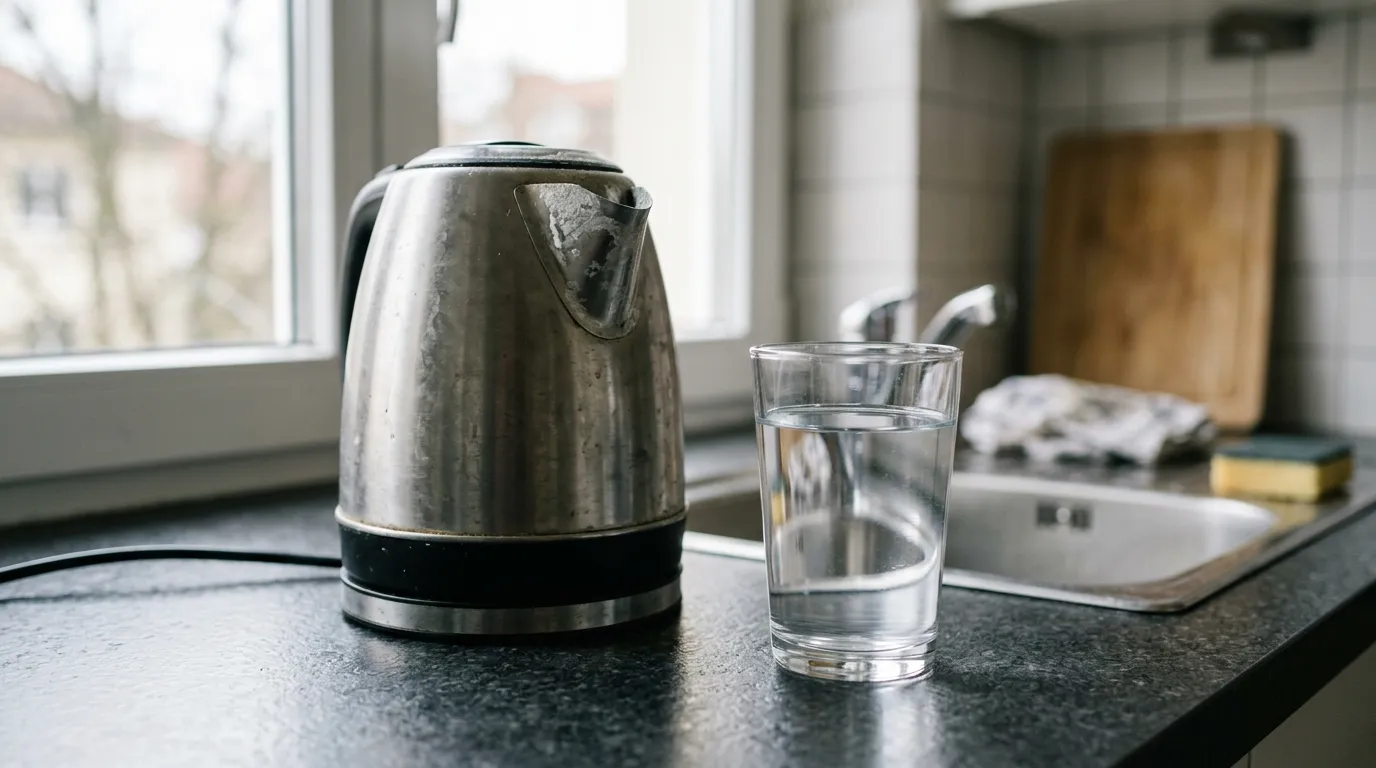
- Scale coming back in your kettle or glasses, which points at a spent anti-scale stage.
- The calendar or litre limit is reached, even when the water seems fine. “Seems fine” is not a test; carbon stops adsorbing long before the water looks or tastes off.
If any one of these shows up, change the cartridge regardless of the date.
Why hard water changes everything
Most of England has hard or very hard water, particularly across the South East, East Anglia and London. Hard water clogs cartridges faster and gets through anti-scale stages and RO membranes well ahead of schedule. If you are not sure where you stand, our guide on whether your water is hard or soft helps you check.
One misconception worth correcting: a plain carbon under-sink cartridge does not stop limescale. It improves taste and removes chlorine and contaminants, but it will not protect your kettle or coffee machine from scale. For that you need a dedicated anti-scale stage, a water softener, or a different approach to your appliances. If scale is your main complaint, our notes on descaling a kettle in a hard-water area are a better starting point than expecting the filter to do it.
Hard water also explains why your neighbour’s cartridge lasts a year and yours does not. Geography is doing the work, not the brand.
Filters expire even when lightly used
A cartridge does not pause when you stop using it. Once carbon or resin has been wetted, it degrades, and manufacturers generally advise using stock within one to two years even on the shelf. For a low-use household this is the key point: change on the time interval, not when the litres run out, because the litres may never run out before the material is past it.
This is the “but we barely use it” trap. A cartridge fitted three years ago in a quiet kitchen is not a bargain; it is an exhausted filter that has been sitting wet the whole time.
What happens if you leave it too long
Overrunning a cartridge is not simply less effective; it can be actively harmful. The UK’s Drinking Water Inspectorate is blunt about this. Failing to change cartridges on schedule causes deposits to build up inside the housing, which becomes a breeding ground for bacteria and can leach removed material back into the drinking water. An exhausted carbon filter can release contaminants it once trapped, leaving you worse off than drinking straight from the tap.
That is the real reason intervals exist. The schedule is not the manufacturer selling cartridges; it is the line past which the filter starts working against you.
A simple maintenance routine
Set a recurring reminder for the shortest interval in your system. If you have a ceramic-carbon candle and an anti-scale pre-filter, that means a 3-month check on the pre-filter and a 6-month change on the candle. Note the date you fit each cartridge on a sticker inside the cupboard, and buy genuine cartridges certified to NSF/ANSI standards and, in England and Wales, approved under DWI Regulation 31 for contact with drinking water. Flush a new cartridge as the maker instructs before drinking, run the tap for a minute or two, and you are set until the next interval.
Frequently asked questions
How often should I change an under-sink water filter cartridge? Every 6 to 12 months for a standard carbon or ceramic-carbon cartridge, with about 6 months being typical for a ceramic-carbon candle like the Doulton UltraCarb. Anti-scale or limescale-reduction stages need changing every 3 to 4 months in hard water. Always go by litres or time, whichever comes first.
How do I know when my under-sink filter needs replacing? The clearest signs are slower flow at the filtered tap, the taste or smell of chlorine returning, a metallic or plastic taste, visible particles in the water, or scale coming back if you have an anti-scale stage. If you have hit the rated litres or the calendar date, change it even when the water seems fine.
Do water filters expire if you don’t use them much? Yes. Once carbon or resin has been wetted it degrades over time, so a lightly used cartridge still needs changing on the time interval. Manufacturers generally advise using cartridges within one to two years. Do not run one for years just because your usage is low.
Does hard water make my filter cartridge wear out faster? Considerably. Hard water clogs carbon and ceramic cartridges sooner and exhausts anti-scale stages and RO membranes much faster. Most of southern and eastern England is hard or very hard, so households there should expect shorter intervals than the headline figures.
What happens if I don’t change the cartridge on time? According to the Drinking Water Inspectorate, an overrun cartridge builds up deposits that become a breeding ground for bacteria and can leach previously removed material back into your water. An exhausted filter can make your water worse than the unfiltered tap, so the change interval is a safety limit, not a suggestion.
How long does the RO membrane last compared with the carbon and sediment filters? In a reverse-osmosis system the sediment and carbon pre-filters last roughly 6 to 12 months and the carbon post-filter about a year, while the RO membrane itself usually lasts 2 to 3 years. Hard water shortens all of these, especially the membrane.