Water Softeners
How to Reset a Water Softener After a Power Cut or Holiday
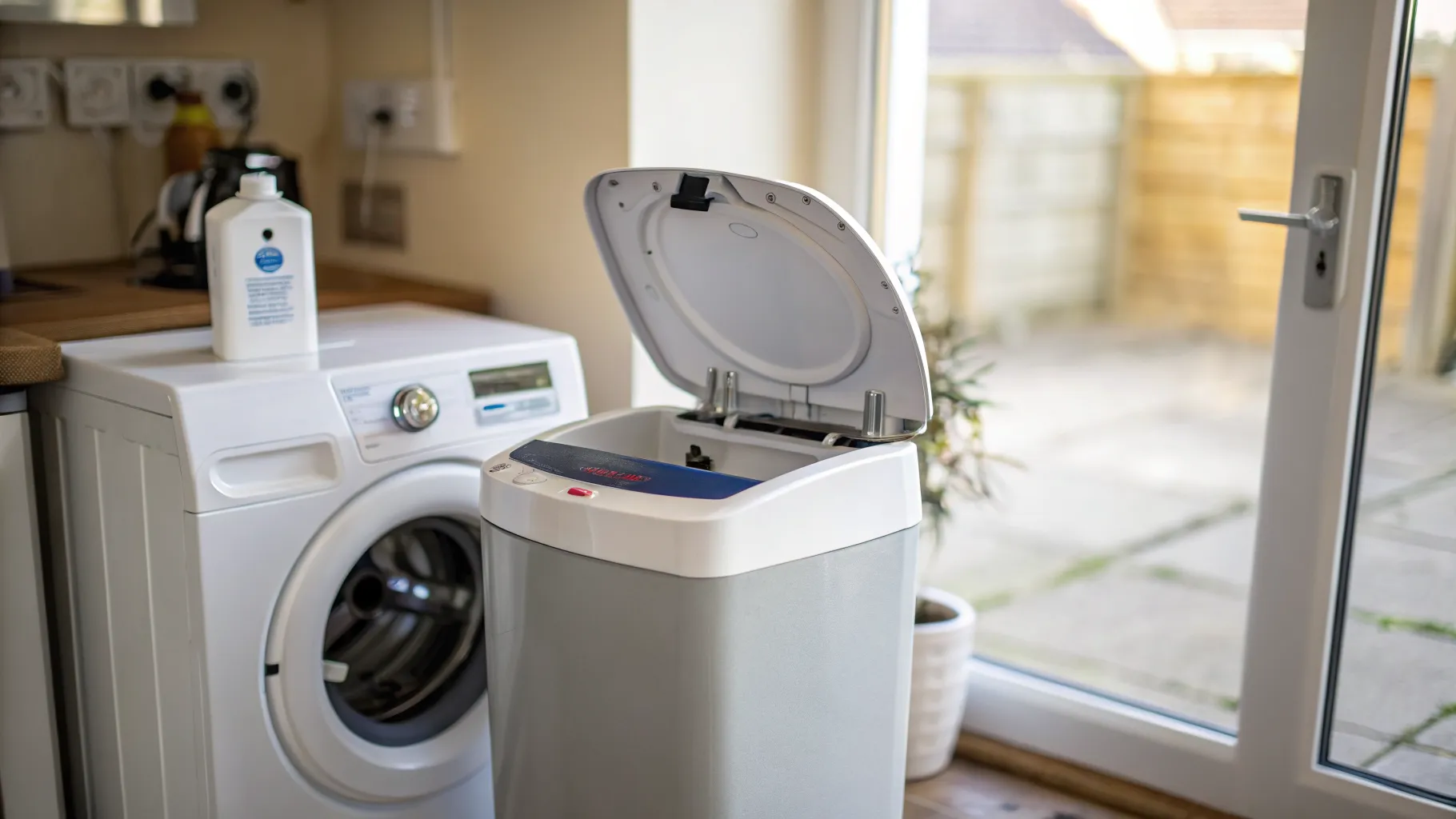
Resetting a water softener sounds alarming, but the fix is almost always small. After a power cut, your softener has not lost its programming and it is not broken. What it has usually lost is the one thing it needs to behave: the correct time of day. Set that, and the rest of the schedule falls back into line. This guide explains what actually needs resetting, why a power cut throws timers and meters out, and exactly what to do for the common softener types sold in the UK. It also covers the ones that need nothing at all.
What a power cut actually changes
An electronic softener stores its real settings (water hardness, resin capacity, cycle times, the regeneration time) in memory that survives a power loss. The casualty is the time-of-day clock. When power returns, many units reset the clock to 12:00 or leave the time display flashing. On some older mechanical-clock valves the clock motor can even run backwards for a while once power comes back.
That matters because the regeneration schedule is anchored to the clock. Softeners regenerate (flush the resin with brine and rinse it) on a delayed cycle, almost always in the early hours when nobody is drawing water. During regeneration the valve diverts to bypass, so hard water passes straight through to your taps for the length of the cycle. If the clock is wrong, that bypass can land in the middle of the day. This is the single most common reason people say the water “went hard again after the power cut”: the softener is regenerating at the wrong hour. Fix the clock and the symptom disappears.
This applies to both common electronic types:
- Timer (calendar) softeners regenerate on fixed days at a set time. They depend entirely on the clock, so a wrong time hits them hardest.
- Metered (on-demand) softeners count the litres you use and hold the regeneration until the set time, usually around 02:00. They still need the right clock, or that delayed regeneration fires at the wrong hour.
First check: do you even need to reset anything?
Before you touch any buttons, look at the time display.
Some popular valves carry a backup that rides out short outages. The Fleck 5600SXT, a very common electronic valve in the UK, has an on-board capacitor that holds the time of day and day of week for at least 48 hours during a power failure. In an outage it drops into a power-saving mode (it stops monitoring water use and the display and motor shut down) but keeps the clock. So a typical UK power cut of a few hours often needs no reset at all.
The tell-tale sign is simple:
- Time is correct: do nothing. The schedule is intact.
- Time is flashing or wrong: the outage was long enough to lose the clock. Press any button to stop the flashing, then set the time. That is usually the only step you need.
You only re-enter hardness, capacity or cycle times if the display has dropped back to factory defaults, which a brief outage does not cause.
How to reset the time by softener type
Fleck 5600SXT and similar digital metered valves
Press the SET or CLOCK button, use the up and down arrows to set the current time of day, then confirm. If the time was flashing after the cut, press any button first to clear it. Leave the rest of the programme alone; you are only correcting the clock. The Pentair service documentation for this valve confirms the 48-hour clock backup and the flashing-time behaviour. You can read it in the Fleck 5600SXT service manual.
Fleck 5600 (older, non-SXT mechanical valve)
This one is set by hand:
- Press in the red button on the front of the controller so the outer notched dial spins freely.
- Turn the outer dial until the correct current time lines up with the time pointer.
- Release the red button.
One important warning: do not touch the central knob or centre lever while setting the time. That controls regeneration, not the clock, and turning it by mistake will start a cycle.
BWT (Perla and WS range)
BWT’s digital units are navigated with the UP and DOWN keys and confirmed with SET. Set the current time of day; the regeneration time sits as a separate value in its own menu. Menu structures differ between the Perla and WS series, so keep the manual to hand. BWT publishes them on its UK site, for example the BWT WS series operating manual.
Aquaphor and other electronic valves
The logic is identical to any electronic valve: reset the clock first, then check that the programmed regeneration time is still set for the early hours. If you are unsure of the exact button label for your model, look for the time or clock menu in your manual rather than guessing. Only re-enter hardness and capacity if the display is showing factory defaults.
The softeners that need no reset at all
Non-electric softeners do not have a clock, so there is nothing to lose and nothing to set.
Traditional Harvey block-salt softeners (the MiniMax M3, Crown F15-3SLT and Homewater F15-3SLT) are twin-cylinder and water-powered. The pressure of your own mains water drives them. They regenerate on demand based on the volume of water measured through them, not on a timer, with one cylinder regenerating while the other keeps supplying soft water. There are no timers, no clock and no programming, so a power cut has no effect whatsoever. The same is true of Kinetico softeners, which use the kinetic energy of moving water to drive a metering turbine and contain no timers, computers or electrical components. Both are immune to outages and surges. If you own one of these, you can stop reading the reset steps; there is genuinely nothing to do.
There is one exception worth knowing about. The newer HarveyArc is still non-electric for softening (twin cylinder, water-powered), but it has a battery-powered “i-Lid” control with WiFi and the myHarvey app. After a power cut, or if your WiFi drops and the i-Lid does not reconnect on its own, you may need to re-pair the lid through the myHarvey app, or reset it by removing and reinserting the batteries. Crucially, the softening never stops; only the app connection needs sorting. Harvey set out the steps in their HarveyArc reset FAQ.
If you are weighing up these mains-powered Harvey and Kinetico units against electronic valves, our best water softener UK comparison breaks down the differences, and our water softener running cost UK guide covers the longer-term salt and electricity picture.
Set regeneration to happen at night
Once the clock is right, confirm the regeneration time is still set for around 02:00. The reason is the bypass mentioned earlier: water is not softened during regeneration, so a daytime cycle means hard water at the taps and a noticeable drop in pressure while it runs. Two in the morning works because no household water is being drawn. A full reset to defaults can move this value, so it is worth a quick check after any outage long enough to need a clock reset.
How to run a manual regeneration
You will want this after a long holiday, or any time you want to force a clean cycle. On Fleck digital valves:
- Immediate regeneration: press and hold the REGEN (or Extra Cycle) button for about three to five seconds until the valve starts cycling. Once it starts it cannot be cancelled and must run through all its cycles.
- Delayed regeneration tonight: press and release REGEN. The display flashes “REGEN TODAY” and the unit regenerates at the next preset time. Press again to cancel if you triggered it by mistake.
On the older Fleck 5600, you start a cycle by turning the centre lever by hand.
Holiday and away mode
Short trips of under about two weeks need nothing. Leave the softener running as normal and it will manage itself.
For longer absences you have a couple of sensible options:
| Situation | What to do |
|---|---|
| Digital control with a vacation or holiday mode | Switch it on to pause regeneration and save salt while away |
| No vacation mode, or you are turning off the mains | Put the softener into bypass using the bypass valve |
| Harvey or Kinetico (non-electric) | Nothing; they regenerate on demand by volume |
Bypass matters more than it looks. If you switch off your mains supply but leave the softener live, some units will still try to regenerate with no water available to complete the cycle, which can damage the valve. Putting it into bypass (or powering it off) avoids that.
When you get back from a trip of two weeks or more, the resin has been sitting in standing water. Run a manual regeneration before you go back to normal use. Regenerating at least every couple of weeks keeps the resin bed fresh and discourages bacteria building up in stagnant water, and a manual cycle flushes it through. If you find the softener stops drawing salt after a long gap, our guide on a water softener not using salt walks through the likely causes.
Frequently asked questions
Do I need to reset my water softener after a power cut? Only if the time display is flashing or wrong. Electronic softeners keep their hardness and schedule settings through an outage; they just lose the time of day. Some, like the Fleck 5600SXT, hold the clock for up to 48 hours, so a short cut often needs no action at all. Non-electric softeners like Harvey and Kinetico need nothing.
Why does my water feel hard again after a power cut? The clock has almost certainly reset, so the softener is now regenerating at the wrong time of day. During regeneration the valve diverts to bypass and hard water passes straight through. Set the time of day to the correct current time and the cycle moves back to the early hours.
Does a power cut damage a water softener? No. It does not harm the unit or wipe its programming; it simply resets the time-of-day clock unless the valve has a battery or capacitor backup that held it. The only damage risk is unrelated: leaving a softener live while the mains water is switched off, so it tries to regenerate with no water.
Do Harvey and Kinetico softeners need resetting after a power cut? No. They are non-electric and water-powered, with no clock or timer to lose. The exception is the smart HarveyArc, whose softening still runs unaffected but whose WiFi i-Lid may need re-pairing through the myHarvey app.
What time should my water softener regenerate? Around 02:00. Nobody is using water at that hour, so the hard-water bypass that happens during regeneration does not reach your taps. If your softener seems to regenerate in the daytime, the clock is wrong; reset it.
Should I bypass my water softener when I go on holiday? For trips under about two weeks, no. For longer absences, use vacation mode if your unit has one, or put it into bypass, especially if you are also turning off the mains. If you would rather not run a softener at all while away, a salt-free water conditioner needs no regeneration, though it works differently from true softening.